



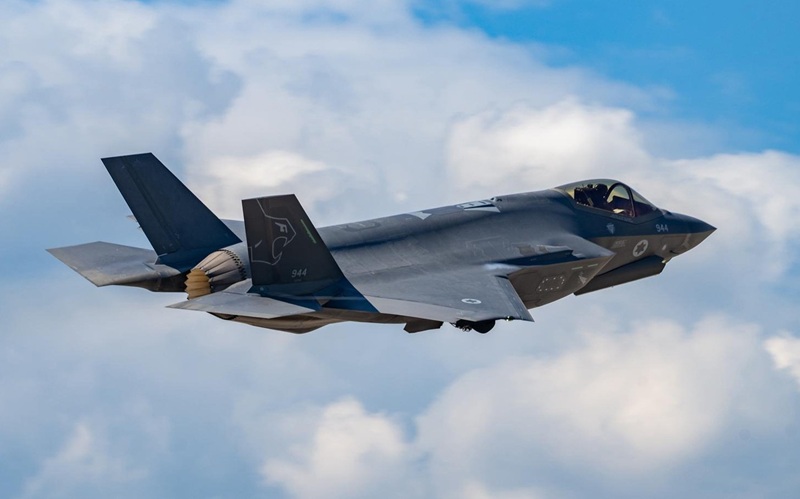
US-Israeli air operations in Iran have continued at a steady pace over the last 36 hours. Since the early hours of yesterday, Israel has also begun bombing Lebanon (Beirut, the Beeka Valley, and the south of the country), where it has hit over 160 targets and where the first Israeli ground operations have been reported close to the border.
During the night and throughout the day of March 2 and in the early hours of March 3, severe attacks throughout Iran occurred, particularly in the Tehran area, where high-ranking military and political figures were eliminated, as well as command centers, government buildings, barracks, and missile bases.
Israel claim to have eliminated senior members of the Ministry of Intelligence (MOIS) of the Iranian regime, including Sayed Yahya Hamidi, Deputy Minister of Intelligence for ‘Israeli Affairs’, and Jalal Pour Hossein, Head of the Espionage Division. The IAF also struck the MOIS headquarters in Tehran. Two important security complexes of the regime were also hit: the IRGC Sarallah headquarters in the Kolahdouz district, in eastern Tehran, targeted in at least 2 waves with JDAM bombs, and a command complex belonging to the police force, two structures used to repress anti-regime protests in Iran.
The USAF struck a weapons factory in the Chitgar district in western Tehran and a logistics support base for the IRGC Aerospace Force Air Defense Command located north of Vardavard in western Tehran. Air strikes were also carried out against Ministry of Defense factories and logistics units in Lavizan, on the northeastern outskirts of the Iranian capital. In addition, an entire government building collapsed as a result of Israeli air strikes in the Haft-e-Tir district, and an apartment building, partially used by Iranian intelligence in Dardasht, Narmak district, was gutted by the Israelis. Also in Tehran, aircraft bearing the Star of David struck the Aboozar base, belonging to the Basij paramilitary forces and located in the Khanabad neighborhood, as well as 2 police stations in the Shahreziba and Nabard neighborhoods. In addition, the Israelis claim to have destroyed the headquarters of the state broadcaster Islamic Republic of Iran Broadcasting (IRIB).
Moreover, at least one RA-01 classified stealth drone, seen flying over the city in broad daylight, certainly participated in the raids on Tehran. Israel is believed to operate a mini-fleet of these long-range stealth drones, capable of gathering intelligence but also of carrying out attacks.
As mentioned, the attacks continued throughout the country. Su-22M3/M4 fighter-bombers and operational OWA UAVs (not mockups) were destroyed at the Seyyed al-Shuhada air base in Shiraz, and ballistic missile launchers in the area were targeted with HELLFIRE missiles launched from USAF MQ-9 REAPER drones, which, like the Israeli HERMES 900s, are increasingly used and essential in search, detection, and elimination operations against ballistic missile launchers.
Heavy attacks by fighter jets from the aircraft carrier LINCOLN against the Konarak naval base, where 5 surface ships (2 light frigates, a JAMARAN corvette, and 2 patrol boats) were sunk and 6 or 7 buildings were damaged or destroyed. The Iranian Navy also lost the expeditionary unit MAKRAN, heavily damaged in attacks on the naval base at Bandar Abbas (where the command center was hit), as well as the SHAHID BAGHERI, a former oil tanker converted into a drone carrier. According to CENTCOM, 11 Iranian military ships were sunk. The US Navy also struck the port of Mahshahr, located in southwestern Iran, and the headquarters of the IRGC Navy's Third Maritime Command. The US Navy was also engaged in the Ahvaz area (southwestern Iran), where an ammunition depot belonging to the IRGC Aerospace Force was destroyed and an oil pipeline was hit. The strategic port of Jask, in the Gulf of Oman, was also hit again.
In Isfahan, a missile base located north of the city was hit, where a launcher was destroyed and a missile control building was damaged. Iranian media report that explosions were also heard within the city, near the local nuclear plant, although the International Atomic Energy Agency (IAEA) has stated that it is not aware of any damage to Iranian nuclear sites.
Elsewhere in the country, Israeli attacks were reported against an industrial research center of the IRGC Aerospace Force's Ballistic Missile Command in Bid Kaneh, near Malard, and against the Dezful air base, home to 3 F-5 squadrons, where aircraft shelters and parking areas were hit and several aircraft were destroyed or severely damaged. The Israeli Air Force also struck a ballistic missile base in Azimieh, near Karaj, and another building belonging to the Ministry of Intelligence in the city of Ilam.
A massive explosion occurred in the city of Sanandaj, in Iranian Kurdistan, following an air strike that hit a military site within the city. The Army air base in Kerman was also hit by USAF fighter jets, while satellite images show extensive damage to storage buildings, bunkers, and drone launch equipment at the Choqa Balk-e facility in western Iran.
Like it was the case on the night between February 28 and March 1, the USAF again used its strategic bombers - this time three B-1Bs that took off from Ellsworth Air Force Base - in attacks against Iranian regime targets during the night, flying non-stop from the United States.
According to the latest official data, the number of munitions used by the IAF since the start of Operation Roaring Lion is over 2,500. By way of comparison, the IAF used approximately 4,300 munitions during the entire Operation Rising Lion in June 2025. Thus, the IAF's attacks are much more extensive. The US claims to have hit more than 1,250 targets in Iran. In total, Israel estimates that between 1,000 and 1,500 members of the Islamic Revolutionary Guard Corps and Iranian security forces have been killed so far, while Israeli and US authorities believe that Iran has no more than 200 long-range missile launchers remaining as a result of the attacks carried out so far.
Iran, for its part, continues to resist and respond with attacks against Israel (after a night of “calm,” it struck again this morning), but even more so against the Arab Gulf states, according to a precise strategy that aims to hit civilian and military targets in those countries to put pressure on their governments to appease Trump or, at the very least, stop allowing the US to use their military bases. Bahrain has again been hit very hard (and protests against the government were also reported during the night) - several civilian buildings and skyscrapers are on fire in Manama - as has Kuwait, where the US embassy was also targeted. The UAE also continues to suffer attacks with SHAHED-136 drones, which have hit residential areas in Ras al-Khaimah and the oil port of Fujairah in the Gulf of Oman (a key hub for ‘bypassing’ Hormuz). Two Amazon data centers were also hit in the Emirates, and one was hit in Bahrain.
In Saudi Arabia, the Ras Tanura refinery, one of the largest in the Middle East, was hit yesterday in response to air strikes against Iranian oil facilities, including the aforementioned pipeline near Ahvaz. Some activities were interrupted after the UAV attack caused a fire in part of the complex. The American embassy in Riyadh was also hit by two SHAHED-136 drones. According to official estimates, Iran launched 871 missiles and 1,126 drones against the Gulf countries, of which a total of 871, i.e., UAVs and missiles, were launched against the UAE, 562 against Kuwait, 146 against Bahrain, and 145 against Qatar, while the rest ended up in Saudi Arabia (17) and Oman (just 2) and about 250 in the sea.
In addition, yesterday the Iranians launched 2 more waves of SHAHED-136 UAVs and a couple of SEJIL-2 solid-propellant multistage ballistic missiles against the RAF base in Akrotiri, Cyprus, causing ‘minor damage’ to the runway. Greece has already mobilized in defense of Cyprus, sending 4 F-16 fighter jets (based in Paphos) and 2 frigates (the FDI KIMON and the PSARA, MEKO class) to the island. Support is also expected from France (1 frigate and “anti-missile and C-UAV systems”) and the UK (1 Type 45 destroyer).
As for naval operations, at least 5 oil tankers have been hit by Iranian drones or missiles in or near the Strait of Hormuz. These are the Ocean Electra, flying the Liberian flag, the Vyom, flying the Marshall Islands flag, the Hercules Star, flying the Spanish flag, the Skylight, flying the Palau flag, and the Stena Imperative, hit in the port of Manama. According to unconfirmed sources, the Skylight, hit 5 nautical miles from Oman, may have been targeted by the Americans because it was monitoring movements in the Strait of Hormuz on behalf of the IRGC.
Despite US and Israeli attacks - at least 4 BAVAR, TEBAS, and TOR-M1 anti-aircraft batteries were eliminated yesterday - Iranian missile defense continues to be active in some parts of the country (the Tehran area, Hamedan, where an S-200VE long-range air defense system is still active, Isfahan, and the southwest). It is possible that these systems were responsible for at least one – or all – of the shoot-downs of the 3 F-15E heavy fighter-bombers of the 335th FS that crashed in Kuwait, officially due to friendly fire from Kuwaiti anti-aircraft systems. This is certainly a real possibility, considering that IFF procedures are extremely complicated in particularly congested airspace polluted by EW. In addition, at least one Israeli HERMES-900 UAV was shot down in Khomeini Shahr, near Isfahan, with a QAEM-118 munition. Two Israeli HERON drones were also shot down.
Strangely active, as confirmed by CENTCOM, the Iranian Air Force. In fact, there are reports of patrol flights by MiG-29B fighters and Yak-130 advanced trainers/light fighters armed with R-73E air-to-air missiles over Tehran, as well as Su-24MK theater bombers, 2 of which were shot down by the Qataris.
In cities – especially Tehran – the Basij militias are still active. Their task is to dissuade the population from protesting against the regime and, for this reason, they continue to be mobilized on the streets of Iranian cities, where they proceed in groups of dozens of motorcycles and pickup trucks and, together with the IRGC, set up checkpoints.




Privacy Policy

Powered by © Mobilbyte s.a.s. Information Technology