



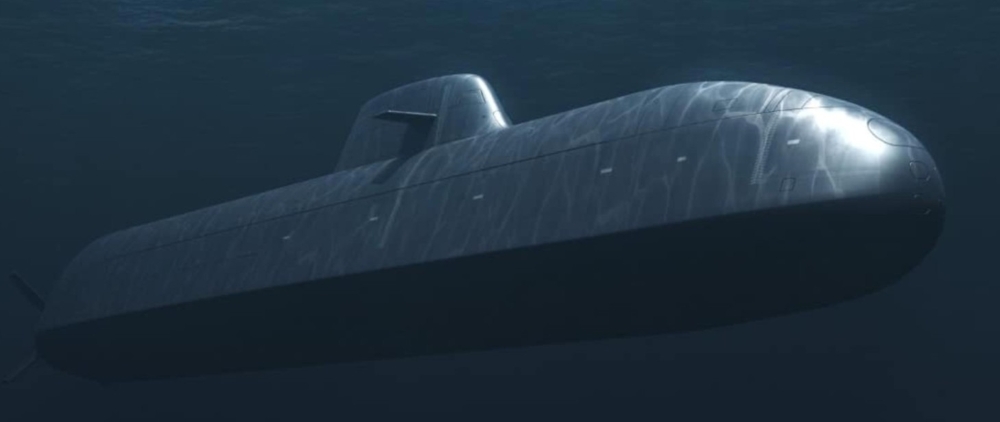
The Royal Norwegian Navy has signed a contract for 2 additional Type 212CD submarines, increasing its planned fleet from 4 to 6 vessels in a move that reinforces NATO's northern flank capabilities and brings the German-Norwegian collaborative programme to its full planned capacity of 12 boats.
The contract, signed in Oslo today, represents a significant expansion of Europe's most ambitious bilateral submarine programme. Norway's decision follows Germany's December 2024 procurement of 4 additional boats, which increased Berlin's order from 2 to 6 submarines. The programme now encompasses 12 identical vessels, with ThyssenKrupp Marine Systems (TKMS) describing the expansion as one of the largest orders in the company's history.
The 212CD programme builds upon a 25-year cooperative relationship between German and Norwegian submarine communities, rooted in Norway's long-standing reliance on German submarine technology since the Second World War. The partnership extends beyond procurement to encompass shared maintenance facilities at Haakonsvern Naval Base outside Bergen, joint life-cycle management, combined training programmes, and equitable cost-sharing arrangements, with both nations splitting non-recurring development costs on a 50-50 basis.
Production is underway at TKMS facilities in Kiel across two production lines, with Norway's first boat scheduled for delivery in 2029 and Germany's fleet following from 2032 through 2037. The expedited Norwegian delivery timeline reflects Oslo's operational priorities in the High North.
The 212CD (where "CD" denotes "Common Design) represents a fundamental departure from its 212A predecessor, despite retaining the designation. At 2,500 tonnes surface displacement and 73 metres in length, the CD variant is substantially larger than the 212A, reflecting its expanded operational remit.
The design philosophy centres on multi-theatre capability. While the 212A was optimised for shallow-water operations in the confined, acoustically complex Baltic Sea, the CD is engineered for blue-water operations across the Norwegian Sea, North Atlantic, and Arctic - environments demanding extended endurance, long-range sensors, and sustained deep-water patrol capability. The hull features a distinctive diamond-shaped cross-section to deflect active sonar waves, drastically reducing target echo strength compared to conventional circular profiles.
Propulsion integrates two MTU 4000 diesel engines, advanced lithium-ion battery cells supplied by Saft (developed in partnership with TKMS), and a fourth-generation HDW fuel cell system manufactured in-house by TKMS at its Kiel facility, representing a significant departure from the Siemens PEM fuel cells used in the Type 212A predecessor. The new-generation PEM (Polymer Electrolyte Membrane) fuel cell plant features modular architecture with field-replaceable stacks and no moving parts, enabling submerged endurance exceeding 41 days with virtually undetectable acoustic, thermal, or magnetic signature. The non-magnetic steel hull construction (using high-strength low-magnetic austenitic stainless steel) renders the vessels impervious to magnetic anomaly detection systems and influence mines, while the fuel cell system's absence of moving parts ensures near-silent operation during extended subsurface transits.
The combat system leverages the ORCCA command and weapon deployment architecture developed by KTA Naval Systems (a Kongsberg-TKMS joint venture, see FW MAG 3/2025), integrating Atlas Elektronik and Kongsberg sensors including SA9510S MKII mine avoidance and navigation sonars and EM2040 MIL multibeam echo sounders. Armament includes six 533mm torpedo tubes with capacity for heavyweight torpedoes, naval strike missiles, and unmanned underwater vehicles, with anti-torpedo torpedoes under concurrent development.
With the German-Norwegian orders complete, TKMS is pursuing substantial expansion opportunities. Canada's procurement of up to 12 submarines to replace the Victoria-class represents the most advanced prospect, with TKMS shortlisted against South Korea's Hanwha Ocean and a final decision expected in 2026. Greece and potentially other NATO members have expressed interest, positioning the 212CD as a cornerstone of European undersea capability through the 2050s.
The Norwegian expansion underscores confidence in the platform's ability to meet evolving Arctic deterrence requirements as Russian submarine activity intensifies across the GIUK Gap and Barents Sea.




Privacy Policy

Powered by © Mobilbyte s.a.s. Information Technology