



Sweden has confirmed preliminary discussions with France and the United Kingdom on potential nuclear weapons cooperation. Prime Minister Ulf Kristersson's revelation to Sweden's SVT broadcaster represents the first time a non-nuclear European nation has openly engaged in such consultations, signalling profound uncertainty about transatlantic security guarantees amid shifting US strategic priorities.
The disclosure comes against the backdrop of the Trump administration's January 2026 National Defense Strategy, which explicitly reorients US military focus toward the Indo-Pacific theatre while reducing European force commitments and delegating continental defence primarily to European NATO members. This strategic withdrawal has catalysed unprecedented discussions about European nuclear autonomy, with Sweden (historically committed to nuclear non-proliferation) now actively exploring access to European deterrence capabilities.
Strategic rationale: Stockholm's security calculus
Sweden's interest in nuclear cooperation stems from converging strategic pressures that have fundamentally altered its security environment. Despite joining NATO in March 2024, Stockholm confronts growing doubts about the durability of American extended deterrence commitments. The Trump administration's NDS characterises Russia as a "manageable threat" for "NATO's eastern members," explicitly signalling reduced US conventional force posture in Europe while expecting allies to assume primary responsibility for continental defence.
For Sweden, positioned on NATO's northeastern flank in proximity to Russian territory and facing sustained hybrid threats, this reorientation creates acute vulnerability. The country's geographic location makes it particularly exposed to potential Russian aggression, especially in scenarios where conventional deterrence proves insufficient and nuclear escalation risks emerge. Swedish defence planners recognise that credible deterrence in the High North requires access to nuclear assurances that can complicate Russian strategic calculations.
Kristersson framed the rationale clearly: "As long as dangerous countries possess nuclear weapons, sound democracies must also have access to nuclear weapons". This statement reflects pragmatic acknowledgement that Sweden's NATO membership (while enhancing collective defence arrangements) does not automatically guarantee nuclear protection if US commitments waver. The Prime Minister emphasised that discussions remain preliminary, with no concrete proposals for deploying nuclear weapons on Swedish territory in peacetime, consistent with Sweden's Defence Cooperation Agreement with the United States.
An influential editorial in Dagens Nyheter, one of Sweden's most authoritative newspapers, argued that Sweden "can no longer avoid a serious discussion about non-US nuclear deterrence options," highlighting the combination of nuclear technology expertise and capable defence industry that could give Sweden "a pivotal role if such a northern European nuclear option were pursued". This public discourse shift underscores that Sweden's nuclear deliberations are just the tip of broader societal reassessment of security assumptions rather than merely governmental positioning.
The French advantage: independence and openness?
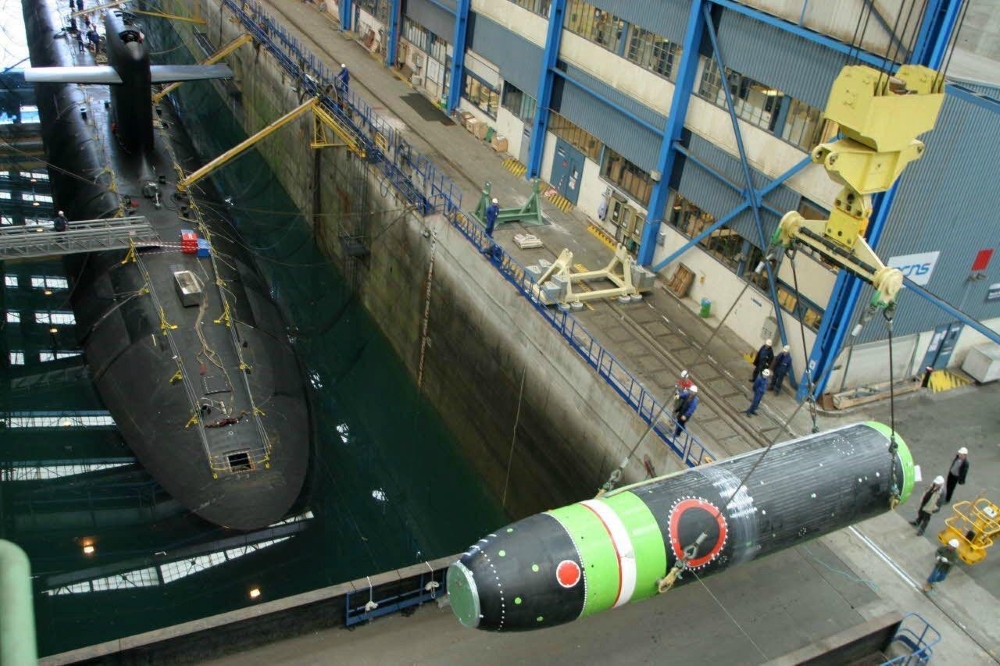
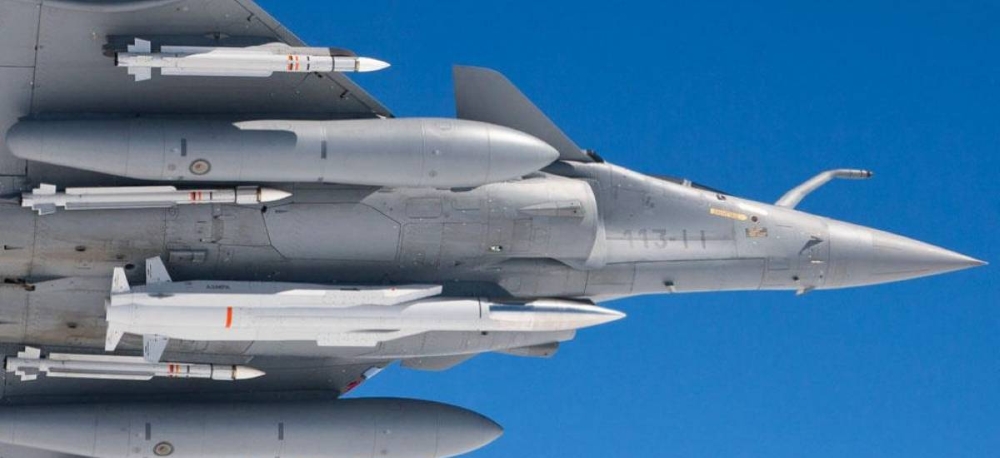
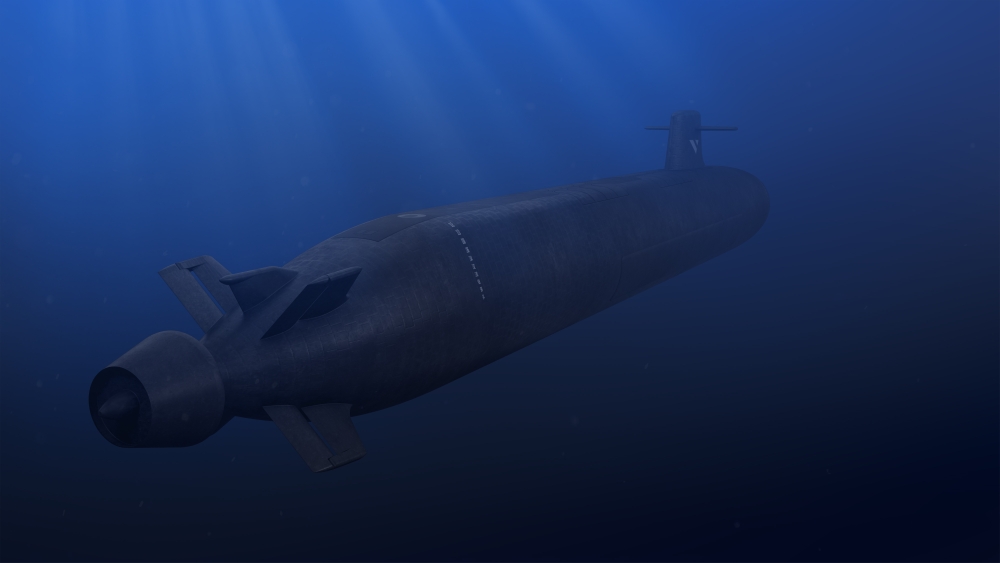
France's nuclear deterrent presents distinct advantages for potential European cooperation that differentiate it fundamentally from the British system. The French “force de dissuasion” maintains complete strategic independence from the US across the entire nuclear weapon lifecycle - from design and manufacturing through deployment and operational control - without reliance on external suppliers or technologies. This sovereignty extends to warhead design, missile production (M51 submarine-launched ballistic missiles and ASMP-A cruise missiles), delivery platforms (4 TRIOMPHANT-class SSBNs and RAFALE aircraft), and targeting decisions, creating genuinely autonomous deterrence capability for the country.
By contrast, the United Kingdom's TRIDENT system, while operationally independent in day-to-day command and control, depends structurally on the United States for critical components and maintenance. Britain purchases TRIDENT II D-5 missiles from the United States under the modified Polaris Sales Agreement, with missiles requiring periodic return to the Kings Bay naval base in Georgia for maintenance conducted by Lockheed Martin. The UK also procures aeroshells for nuclear warhead production from US suppliers, creating multiple dependency points that could theoretically constrain British autonomy if Washington chose to apply pressure.
This dependency, while not affecting Britain's sovereign launch authority, raises questions about long-term sustainability if transatlantic relations deteriorate. For Sweden and other European nations seeking insurance against US unreliability, French independence offers more credible autonomy.
Now, France has demonstrated increasing openness to European nuclear cooperation. President Emmanuel Macron has repeatedly signalled willingness to discuss extending France's nuclear umbrella to European allies, stating that France would "open the strategic debate on using our deterrent to protect our allies on the European continent". The July 2025 Northwood Declaration with Britain formalised this shift, establishing a Nuclear Steering Group to "coordinate across nuclear policy, capabilities and operations" and declaring that "there is no extreme threat to Europe that would not prompt a response by both nations".
Importantly, France remains outside NATO's Nuclear Planning Group (NPG), maintaining independence from Alliance nuclear command structures while contributing to overall deterrence architecture. This positioning allows France flexibility in bilateral or multilateral European nuclear arrangements without formal NATO constraints. Kristersson acknowledged this distinction, noting that "the French [nuclear weapons] are uniquely French, but France also shows openness to discussing with other countries".
Potential cooperation models remain undefined but could range from consultative arrangements and doctrine coordination to more substantive programmes involving joint targeting analysis, nuclear mission exercises, or even collaborative development of delivery systems. The precedent exists: during the Cold War, France and Britain considered jointly developing an air-launched nuclear missile (TASM), though they ultimately pursued only conventional variants (STORM SHADOW/SCALP-EG). Recent announcements to resume STORM SHADOW production and develop successor systems demonstrate continued Franco-British industrial cooperation that could extend to nuclear-related capabilities.
For Sweden, French openness creates pathways for participation that do not require abandoning non-nuclear weapon state status under the Nuclear Non-Proliferation Treaty. Cooperation could encompass conventional support missions for nuclear operations, participation in nuclear strategic dialogues, enabling dispersed basing for French aircraft, or contributing to shared early-warning and command infrastructure. Such arrangements would enhance Swedish security without necessitating indigenous weapon development or violating international legal obligations.
This notwithstanding, to the eyes of many countries, relying on France would mean just changing the strong US protection for the weak French one. From an operational standpoint, it cannot be otherwise, as nuclear deterrents need a direct command chain to be triggered withing minutes rather than month-long democratic processes. In short, the “key” would pass from the US president’s hand to the French president’s one. The French advantage to European countries would be a theoretical alignment in their foreign agendas.
Can France be trusted?
Unfortunately, in Europe as well as in the EU, France's reputation as an unreliable European partner stretches across eight decades, from military failure to political obstruction to unilateral adventurism. This legacy casts long shadows over contemporary nuclear cooperation proposals and raises legitimate questions about whether French commitments (nuclear or otherwise) can be trusted when European interests diverge from Parisian calculations. The catalogue of French unreliability begins with the Phoney War (1939-1940), when France's hesitant military response to Germany's invasion of Poland undermined Allied credibility.
Post-war, France undermined its own European Defence Community (EDC) proposal - perhaps the most dramatic example of French unreliability. In 1950, French Prime Minister René Pleven proposed creating a supranational European army to prevent German remilitarization while maintaining Allied cohesion. Yet after four years of negotiations, the French National Assembly rejected the EDC Treaty in August 1954. Gaullists, Communists, and nationalists united to kill France's own initiative over sovereignty concerns, demonstrating that French enthusiasm for European integration evaporated when it constrained French autonomy. This episode taught European partners that French-led integration projects could not be trusted to reach fruition.
More recently, the 2005 rejection of the European Constitution referendum dealt another blow to French European leadership. French voters rejected the treaty 55%-45%, with France becoming the first country to vote down a Constitution that French President Jacques Chirac had championed. This rejection, coupled with a Dutch "no" vote, killed the Constitution and plunged the EU into institutional crisis. The irony was acute: France had been among the most enthusiastic proponents of deeper European integration, yet French voters rejected it when presented directly. The subsequent imposition of the nearly identical Lisbon Treaty by parliamentary vote rather than referendum in 2007 (explicitly circumventing the public's expressed will) further damaged France's democratic credibility within Europe.
France's role in the 2011 Libya intervention exposed another dimension of unreliability: French willingness to pursue national interests under humanitarian pretences, without any respect (or warning) for the allies, then abandoning the consequences. France led calls for military intervention, with President Nicolas Sarkozy's government becoming the first to recognize the rebel National Transitional Council and pushing for UN Security Council authorization. More damningly, France pursued contradictory policies after Gaddafi's fall, officially supporting UN-led negotiations while covertly backing General Khalifa Haftar's forces, including their 2019 assault on Tripoli that targeted civilian infrastructure. France dual-track policy prolonged conflict while claiming to support stabilization.
During the eurozone crisis (2010-2012), France's role alongside Germany in dictating austerity terms to Greece, Ireland, Portugal, and other debtor nations further damaged French credibility as a solidaristic European partner. French and German banks held massive Greek sovereign debt, and rescue packages designed by French President Nicolas Sarkozy and German Chancellor Angela Merkel were structured to protect these creditors while imposing devastating social costs on debtor nations. The insistence on "voluntary" haircuts and retroactive legal changes demonstrated French willingness to bend rules when financially convenient, while demanding rigid compliance from weaker members. This double standard undermined trust in French commitment to genuine European partnership. Today, as France currently maintains a deficit of 6.2% of GDP (more than double the EU's 3% limit), Paris continues demanding flexibility from Brussels while resisting structural reforms at home. Despite being under excessive deficit procedure since July 2024, Paris has successfully negotiated special treatment: the European Commission granted France until 2029 to reach compliance, extended from the standard timeline, and allowed temporary softening of fiscal consolidation requirements for 2025-2027 that reduces annual adjustment obligations. As critics note, France "parvient à tordre les règles budgétaires communes de la zone euro en sa faveur" (manages to twist common eurozone budgetary rules in its favour) through Commission leniency, even as it refuses the painful adjustments it previously demanded from Southern European nations. This double standard epitomizes the opportunistic unreliability that has characterized French European policy for decades.
An historic European first
Notwithstanding difficulties, perplexities, and the big issue of mutual trust, the significance of Sweden's nuclear discussions represents an unprecedented development in European strategic culture. Never before has a non-nuclear European NATO member openly acknowledged exploratory talks on nuclear weapons cooperation with European nuclear powers outside formal Alliance structures. This breaks decades of taboo wherein nuclear deterrence remained either an US prerogative extended through NATO or a strictly national preserve of France and Britain.
Historical proposals for European nuclear cooperation - from the failed European Defence Community (1954) to various French initiatives for "concerted deterrence" - remained largely theoretical or confined to confidential diplomatic channels. Sweden's public acknowledgement transforms these discussions into legitimate policy discourse, potentially establishing precedents for other European states confronting similar security anxieties. Poland and Germany have both expressed interest in European nuclear arrangements, with Poland particularly focused on deterrence for NATO's eastern flank.
The timing amplifies the watershed nature. The Northwood Declaration itself, signed only six months prior to Sweden's announcement, marked the first formal coordination agreement between European nuclear powers. Sweden's engagement represents the first extension of this nascent European nuclear architecture beyond the Franco-British bilateral framework. NATO Director of Nuclear Policy Jim Stokes had emphasised in June 2024 that "Sweden needs to communicate to its public the importance of having joined a nuclear alliance," signalling Alliance expectation that Stockholm would address nuclear policy explicitly.
Kristersson's revelation also coincides with the release of Trump's National Defense Strategy, which confirms once again the demand that NATO allies reach a combined 5% target that dwarfs previous Alliance benchmarks. This unprecedented burden-sharing demand, coupled with explicit US force reductions in Europe, creates structural conditions favouring European nuclear discussions that would have been politically untenable even two years ago (as we argued in FW MAG 2/2025, should European countries really spend 5% of their GDP in defence, they may not need NATO).
Sweden's participation carries particular symbolic weight given its historical nuclear abstinence. Sweden signed the Nuclear Non-Proliferation Treaty in 1968 and ratified it in 1975, formally renouncing the weapons programme it had pursued since 1946. This decision reflected both strategic calculation - Swedish planners concluded nuclear weapons would make Sweden a target rather than deterring attack - and normative commitment to non-proliferation. Sweden has since maintained active disarmament advocacy, particularly within NPT processes, positioning itself as a moral voice for nuclear restraint.
The shift toward nuclear cooperation discussions therefore represents ideological evolution. Critics, including the Swedish Peace and Arbitration Society, argue that NATO membership has already undermined Sweden's independent foreign policy and disarmament credentials, pointing to resumed arms exports to Turkey and weakened positions in UN disarmament forums. Nuclear cooperation would deepen this transformation, potentially compromising Sweden's traditional role as bridge-builder and neutral mediator.
Yet proponents contend that changed geopolitical realities demand changed policies. The Dagens Nyheter editorial noted that "no one wants to discuss Swedish nuclear weapons, but we must," arguing that Trump's explicit threats to NATO allies and Putin's imperialist aggression against Ukraine - a country that surrendered nuclear weapons under security assurances - have shattered post-Cold War assumptions about European security. In this view, Swedish nuclear abstinence made sense when credible American guarantees existed; absent that assurance, continued unilateral restraint risks catastrophic vulnerability.
Implications and open questions
While Kristersson emphasised that discussions are "not very precise yet" and involve no concrete timelines or proposals, the very existence of these conversations reshapes European strategic discourse. Several critical questions remain unresolved that will determine whether Sweden's nuclear engagement advances beyond consultations to operational cooperation.
First, the legal and institutional frameworks require clarification. Sweden's NPT commitments prohibit receiving transfer of nuclear weapons or control over such weapons. However, NPT articles I and II have historically accommodated NATO nuclear sharing arrangements wherein US weapons remain under dual-key control with non-nuclear weapon states participating in delivery and targeting. Whether similar arrangements could apply to French cooperation, or whether Sweden's involvement would be limited to conventional support roles and strategic consultation, remains undefined.
Second, the political sustainability of French nuclear extension requires assessment. France's arsenal, sized for "strict sufficiency" to deter threats to national survival, comprises approximately 300 warheads delivered by four SSBNs and air-launched cruise missiles. This force structure, optimised for second-strike capability against Russian cities, may lack the flexibility and capacity to credibly extend deterrence across multiple European allies while maintaining homeland protection. Expanding France's nuclear arsenal or developing additional delivery systems suitable for limited nuclear options would require substantial political will and financial investment at a time when France already faces budget constraints (but the French solution we expect is “mettre à contribution”, read asking for money, not so differently from what Trump does).
Third, coordination mechanisms between French, British, and potentially Swedish nuclear cooperation need institutional architecture. The Northwood Declaration established the Nuclear Steering Group co-chaired by French and British officials, which held its first meeting in December 2025. Whether Sweden would participate in this forum, join NATO's Nuclear Planning Group (from which France abstains), or establish separate trilateral mechanisms remains uncertain. Effective coordination joint exercises, shared intelligence, coordinated targeting - that would test both French independence and Alliance cohesion.
Conclusion
Sweden's nuclear discussions with France and Britain, while still at early exploratory stages, represent an historic departure in European security arrangements. For the first time, a non-nuclear European state has openly acknowledged consultations on nuclear weapons cooperation with European nuclear powers, driven by profound uncertainty about US extended deterrence reliability. France's independent nuclear capability - unconstrained by US technological dependencies that limit British autonomy - positions Paris as the most credible European nuclear partner, particularly given Macron's demonstrated willingness to discuss European deterrence extension.
Whether this evolution advances to operational cooperation or remains confined to strategic dialogue depends on legal frameworks, political will, resource allocation, and Alliance dynamics that remain unresolved. What is certain is that the taboo against European nuclear cooperation outside US frameworks has been broken, opening policy space that seemed unimaginable before Trump's return and Russia's sustained aggression reshaped European strategic consciousness.
Follow us on Telegram, Facebook and X.




Privacy Policy

Powered by © Mobilbyte s.a.s. Information Technology