



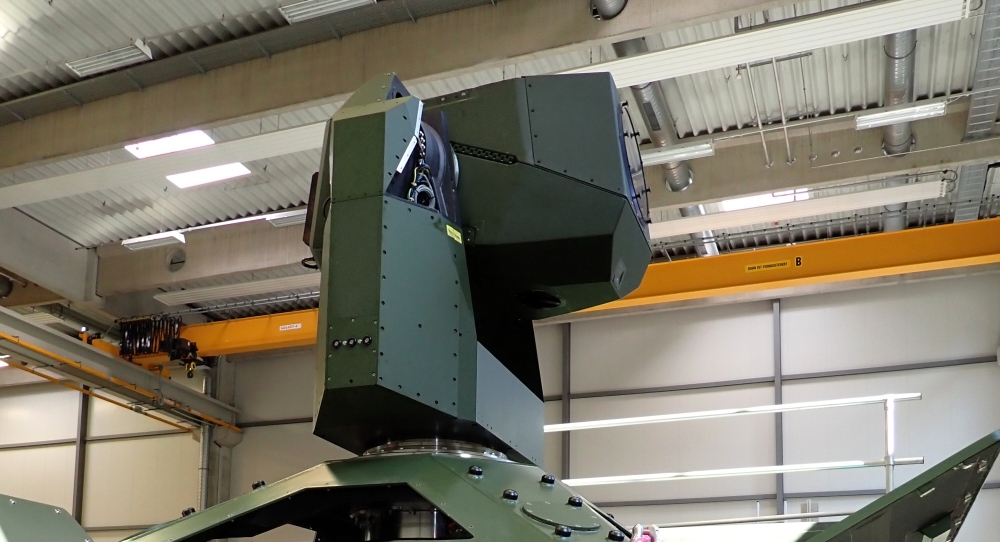
Rheinmetall and MBDA Germany confirmed on 5 January that they will form a new private limited company (GmbH) in the first quarter of 2026, combining their complementary expertise to deliver operational laser effectors for the German Navy. The partnership, which formalises a working relationship dating back to 2019, aims to address the Bundeswehr's urgent requirement for cost-effective counter-drone capabilities whilst maintaining national sovereignty over critical defence technologies.
The joint venture represents the culmination of years of technological collaboration between the two firms. In January 2021, Rheinmetall and MBDA Deutschland secured a contract from Germany's Federal Office for Bundeswehr Equipment (BAAINBw) to fabricate, integrate, and test a laser weapon demonstrator in the maritime environment, with work shared roughly equally between the partners. MBDA Deutschland assumed responsibility for target detection and tracking, the operator's console, and integration with command-and-control systems, whilst Rheinmetall handled the laser weapon station, beam guidance, cooling, and the high-energy laser source itself.
The demonstrator was integrated aboard the German Navy frigate SACHSEN (F219), where it underwent a comprehensive year-long trial programme under operational conditions. During more than 100 firing and tracking tests conducted at sea, the system demonstrated its capability to engage targets with precision even in challenging scenarios, including 'Blue Sky' engagements without using terrain as a beam block. The system proved capable of tracking a target the size of a one-euro coin at considerable distance, concentrating laser energy precisely enough to prevent overshooting and ensure maximum safety.
Both companies brought substantial prior experience to the partnership. Rheinmetall has pursued high-energy laser development for over a decade, conducting field trials of a 50-kilowatt demonstrator as early as 2012. Those tests, conducted at the company's Ochsenboden Proving Ground in Switzerland, successfully engaged unmanned aerial vehicles at 2 km and cut through 15-millimetre steel girders at 1 km range. The company subsequently developed functional prototypes integrated with Oerlikon air defence turrets, demonstrating the tactical viability of laser weapons for counter-rocket, artillery, and mortar operations.
MBDA, meanwhile, has established itself as Europe's foremost developer of laser directed energy weapons through multiple parallel programmes. In the United Kingdom, MBDA leads the DragonFire programme alongside Leonardo UK and QinetiQ, which achieved the first high-power firing of a laser weapon against aerial targets in British military history. Following successful trials in which the system destroyed high-speed drones, MBDA UK secured a £316 million contract in November 2025 to supply DragonFire systems to the Royal Navy from 2027. Additionally, MBDA acquired a stake in CILAS, the French laser technology specialist behind the HELMA-P counter-drone system, which successfully neutralised targets at 800 m during trials and was deployed to secure the Paris 2024 Olympic Games. In Italy, MBDA signed a memorandum of understanding with Leonardo in December 2024 to develop Fire Unit Laser Direct Energy Weapons for the Italian Navy.
German counter-drone requirement and future operational capability
The German Navy's requirement centres on an operational laser weapon system to complement conventional guns and guided missiles, particularly for countering drones and highly agile targets at short and very short ranges. Following the successful sea trials, the demonstrator was transferred to the Laser Competence Centre at the Technical Centre for Weapons and Ammunition (WTD 91) in Meppen for further land-based testing, including additional counter-drone trials.
According to industry statements, an operational laser weapon system could be available to the German Navy as early as 2029. Roman Köhne, Head of Rheinmetall's Weapons and Munitions division, emphasised that nationalising the technology was a primary objective from the outset, aiming to maintain and expand German jobs while ensuring national sovereignty and security of supply during crises.
Thomas Gottschild, CEO of MBDA Germany, described the joint venture as setting "new standards in the development and production of state-of-the-art military laser weapon systems, designed and made in Germany". He highlighted the companies' dedication to bringing the proven maritime product to market swiftly, providing the Bundeswehr with additional drone defence capabilities by combining complementary core competencies.
Strategic implications and export potential
The joint venture positions Germany at the forefront of the rapidly expanding directed energy weapons market, which analysts project will grow from approximately $9.2 billion in 2025 to nearly $40 billion by 2035. The naval platform segment represents a particularly attractive market, with navies worldwide seeking cost-effective alternatives to expensive missile inventories for countering drone swarms and asymmetric threats.
Beyond meeting domestic requirements, the partnership could serve as a model for European defence industrial cooperation, with MBDA CEO Eric Béranger having previously urged European nations to "work together" on laser weapon development rather than pursue purely national programmes. The demonstrator's successful transition from land-based testing to further development for potential land-based applications suggests the technology could eventually address counter-drone requirements across multiple domains.
Nevertheless, the Rheinmetall-MBDA joint venture positions Germany within an increasingly competitive global race to operationalise directed energy weapons, albeit via a distinct developmental pathway emphasising mature demonstrator technology over experimental prototypes.
The United States Navy currently leads Western deployments, with its 60-kilowatt HELIOS system installed aboard the ARLEIGH BURKE-class destroyer USS PREBLE since August 2022. Developed by Lockheed Martin, HELIOS successfully engaged aerial drones during fiscal year 2024 testing and represents the first tactical laser system integrated into existing warships. The system features not only hard-kill capability but also intelligence, surveillance, and reconnaissance functions plus optical dazzling capacity. However, US progress has been halting: despite investing $1 billion annually in directed energy development, the US Navy still lacks a fully fielded operational laser capability, with senior leadership expressing frustration over developmental challenges including power generation, thermal management, and environmental resilience. The service currently operates 8 lower-powered ODIN laser dazzlers across its destroyer fleet, whilst a 150-kilowatt Laser Weapon System Demonstrator operates aboard a SAN ANTONIO-class amphibious vessel.
China unveiled its substantially larger LY-1 system at the September 2025 Victory Day Parade in Beijing, claiming capabilities that potentially exceed Western counterparts. While precise specifications remain undisclosed, Chinese state media suggested the LY-1 could deliver power levels enabling interception of anti-ship missiles as well as drones, with sufficient onboard space for power units to support sustained operations. A visually similar system was observed installed aboard a People's Liberation Army Navy TYPE 071 amphibious transport dock in 2024, suggesting accelerated progression towards operational deployment. Notably, Chinese official descriptions emphasised "maritime attack" applications alongside defensive counter-drone roles, indicating offensive employment concepts beyond Western defensive-only doctrine. Chinese firms have already secured export contracts for lower-powered counter-drone lasers to Saudi Arabia, Iran, and reportedly Russia.
By contrast, the German programme distinguishes itself through methodical validation. This comprehensive testing regime positions Germany to field an operationally qualified system by 2029, potentially achieving deployment ahead of US programmes still wrestling with reliability and maintainability challenges. The joint venture's emphasis on "designed and made in Germany" technology also reflects European strategic autonomy priorities, contrasting with US reliance on single prime contractors and Chinese state-directed development.




Privacy Policy

Powered by © Mobilbyte s.a.s. Information Technology