



Europe has woken up on defence - but it still has a long way to go. At last week’s ASD conference in Brussels, panelists agreed: political attention is back, money is on the table, and after decades of ‘strategic absence’, defence has re-entered Europe’s vocabulary. As ASD Secretary-General Camille Grand noted, the sector is showing “very strong momentum.” Yet old obstacles persist, and new ones are emerging.
At the heart of the challenge lies Europe’s original sin: fragmentation. Twenty-seven European countries - and others like the UK, Norway, and Turkey all members of ASD - operate as separate defence ecosystems, each with its own sovereignty reflexes, procurement rules, and industrial priorities. This fragmentation is no longer merely inefficient: it is strategically dangerous.
Big Bang(s) vs. inefficiencies
Europe’s aerospace and defence (A&D) industry is expanding faster than at any time since the Cold War. ASD data show turnover grew 10.1% in 2024 to €325.7 billion, while employment surpassed 1.1 million jobs. Industry and government R&D hit €25.2 billion.
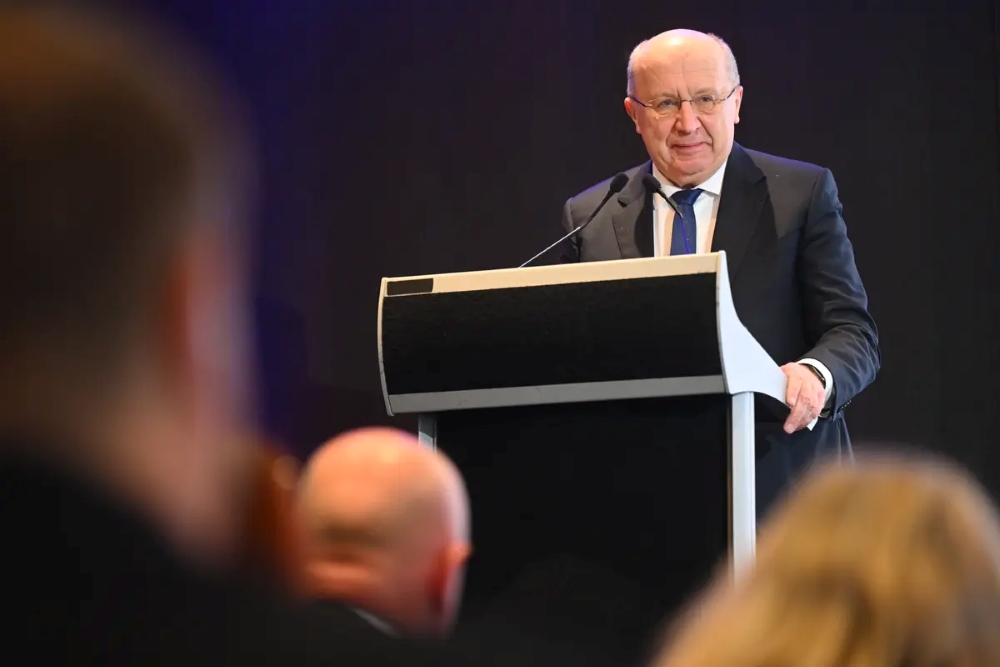
Political momentum mirrors this industrial surge. Among other measures, the EU has launched €150 billion in SAFE loans for defence, which EU Defence and Space commissioner Andrius Kubilius called a financial “big bang,” alongside proposals to raise Defence and Space spending to €131 billion in the coming years through next MFF.
Yet growth and political initiatives alone cannot hide structural vulnerabilities: fragmentation, lack of scale, raw-material shortages, and dependence on non-European suppliers leave Europe struggling to scale production when security demands accelerate.
ASD President and SAAB CEO Micael Johansson warned that while Europe’s A&D sectors are “essential for Europe’s security, connectivity, and sovereignty,” the continent has yet to “build the capabilities needed to be a strong pillar of NATO and a capable actor in its own defence and deterrence.” He added that efforts cannot stop once the war in Ukraine ends: “This growth doesn’t have to end with Ukraine. We must ensure our industries continue building Europe’s sovereign capability for the long term.”
Not a temporary bubble
Talking about the main issue challenging European defence, Kubilius said: “Fragmentation is why we are not fully developing our defence industry and why we are not using the full potential of the single market.” Legacy politics and sovereignty reflexes mean member states often prioritise national control. Even EDIP, the EU programme designed to encourage joint procurement, has seen exemptions allowing “solo” contracts for urgent capabilities. The result, panelists explained, is duplication, higher costs, and incompatible platforms. Kubilius stressed the need for a “single, integrated defence market,” a strategy the Commission plans to unveil next year.
Fragmentation also affects supply chains. ASD Vice-Chairman and MBDA CEO Éric Béranger emphasised that Europe’s defence revival relies not only on primes but on hundreds of SMEs - the backbone of the ecosystem - that endured decades of underinvestment, consolidation, and offshoring. MBDA doubled its output of complex weapons in a couple of years, but scaling further requires rebuilding sub-tier suppliers and long-term government predictability. “To ramp up a supply chain that has been kept at a very low level for 30 years, policymakers must convince SMEs that this is not just a bubble - it’s here to stay,” Béranger said. Johansson echoed the point: keeping SMEs “in” the ecosystem is critical. “We have a responsibility to support these companies so they can remain agile and innovative.”
Meanwhile, Béranger also rejected the idea that cooperation diminishes national control: “Sovereignty is about freedom of decision and action. If you decide to cooperate and set conditions upfront, cooperation and sovereignty go hand in hand. MBDA proves it.”
But the issue is broadr than that. As Grand added, “a significant share of defence procurement still flows to non-European suppliers, highlighting the urgent need to reinforce supply chain sovereignty and ensure that European investments strengthen Europe’s own industrial capabilities.”
Design authority: Europe’s strategic key
A recurring theme at the conference was the need to preserve and expand Europe’s design authority, particularly for advanced systems. Manufacturing without design authority means dependency: assembly alone does not grant the ability to upgrade, certify, or evolve capabilities.
Design authority allowed Europe to rapidly adapt systems for Ukraine without waiting on foreign suppliers a process that would have taken years otherwise. As Europe imports more off-the-shelf equipment, its ability to control future generations erodes.
Transatlantic dependence: cooperation without overreliance
No one at the conference advocated decoupling from the US - interoperability within NATO remains essential. Yet European NATO members still import 60-70% of defence equipment from the US, while US markets remain largely closed to European firms. “Competition must be reciprocal,” Johansson noted.
The EU aims for 50–65% European content in defence systems – something considered not protectionism, but strategic realism. However, achieving this remains a challenge. According to the SAAB CEO: “From the US perspective, priorities one to five are in the Pacific. We have no choice but to develop a stronger European perspective. That benefits the US, too. We must also focus on interoperability: connectivity and multi-domain operations are more important than everyone flying the same aircraft or driving the same tanks.”
Raw materials and industrial vulnerability
Beyond procurement and cooperation lies a deeper weakness: critical raw materials and advanced electronics. Europe lacks mining, refining, and processing capacity for rare earths, energetics, semiconductors, and specialised composites. China controls more than 80% of rare earth production and refining. Decades of dependency leave Europe vulnerable.
EPP MEP Nicolás Pascual De Le Parte noted: “Industrial power without material sovereignty is a strategic illusion. We made ourselves vulnerable because we did not exploit our own resources.” EDIP’s new security-of-supply mechanism is promising, but success depends on implementation.
Capabilities vs. industry: the silent dilemma
The conference also highlighted a central dilemma: should Europe prioritise acquiring capabilities quickly, even from abroad, or invest in its own industry, even if slower? Buy fast, and Europe strengthens militarily in the short term; buy European, and it gains strategic strength for the long term. Participants stressed that the choice is false: if Europe outsources too much now, its industrial base will vanish before the next crisis.
A panelist summed it up: “Industry is losing attention from governments because capabilities are prioritised. We must push industry development to the centre of our strategy: overcome fragmentation, expand joint procurement, and support supply chains. That must be our priority.”
Johansson added a historical warning: “We cannot repeat the pattern of surging in crisis and dismantling in calm. Long-term commitments are essential to preserve industrial infrastructure.”
A warning from history
In closing, Kubilius drew a stark analogy: Europe today resembles the United States before Pearl Harbor - aware of danger, militarily awakened, but not mobilised at the scale required. “Victory in 1945 was not only a victory of armies. It was above all a victory of factories. If America in 1940 had been fifty separate states - fifty armies, fifty markets - it would never have won the production war, and therefore the real war.”
Europe’s defence awakening is real - but momentum alone will not guarantee security. Without scale, industrial sovereignty, and design authority, Europe risks repeating history: militarily alert in words, but unprepared in factories. Johansson concluded: “It doesn’t have to end with Ukraine. We must ensure our industries continue building Europe’s sovereign capability for the long term.”



Privacy Policy

Powered by © Mobilbyte s.a.s. Information Technology