



The UK Space Agency (UKSA) and the UK Ministry of Defence (UK MoD) contracts, awarded under the National Space Operations Centre (NSpOC) framework, secure Spaceflux’s central role in delivering the UK’s orbital intelligence capability.
The value of the contracts and their exact provisions have not yet been disclosed but 2 of the deals renew Space Surveillance and Tracking services that SpaceFlux was already delivering to the UK Space Command, while the third award added a new layer of surveillance for Low Earth Orbit (LEO) objects.
Under the 3 contracts, Spaceflux now delivers persistent surveillance across all orbits, from LEO to GEO and beyond. The service combines routine monitoring, focused on ensuring the security of priority UK satellites, and on-demand tasking in the event of collisions, fragmentations, or unexpected manoeuvres.
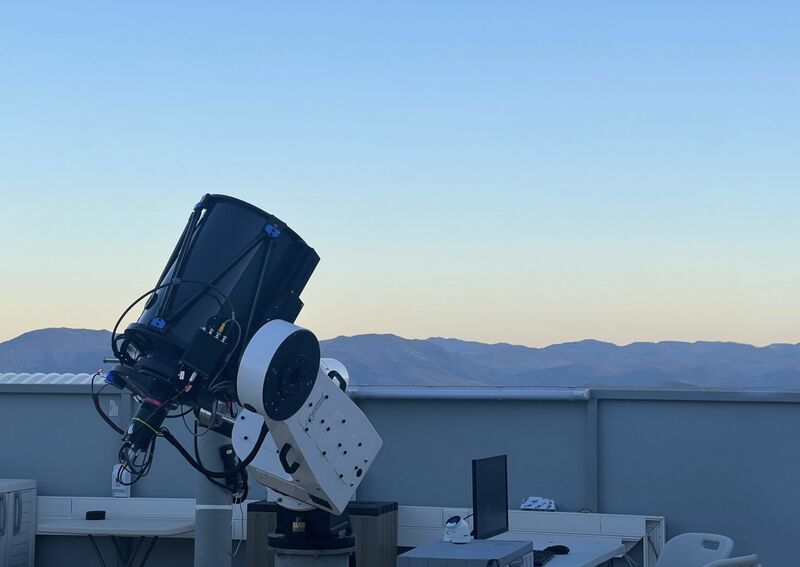
SpaceFlux combines datasets on behalf of the UK’ Space Command and does so through a network of proprietary optical sensors, enhanced with Short-Wave Infrared (SWIR) imaging for day-and-night tracking. These sensors will be integrated directly into BOREALIS, the new Space Command and Control System being deployed by the UK National Space Operations Centre (NSpOC).
SpaceFlux is leading a consortium of firms to build a more resilient range of sensors using different surveillance methods: work with Safran and GMV is focused on passive RF; a partnership with Look Up is adding radar systems; work with EOS is focused on laser ranging and Optera brings expertise in neuromorphic sensors. “By fusing these complementary technologies, the consortium enables multi-sensor data correlation and cross-validation, strengthening resilience against spoofing, signal loss, or sensor degradation – and giving the UK one of the most comprehensive and reliable space surveillance architectures worldwide”.
SpaceFlux brings all the data together thanks to its AI-driven CORTEX analytics platform, which provides real-time anomaly detection, behavioural characterisation, and predictive insights to ensure the delivery of continuous, high-fidelity orbital intelligence.
This marks a continued growth in SpaceFlux’s role in the UK’s Space Domain Awareness efforts, considering that the firm was earlier selected, in late 2023, to deliver Project NYX ALPHA, a new space-surveillance telescope installed in Cyprus within UK base territory. For many years the UK has maintained operational space-surveillance sensors atop the Troodos mountains / Mount Olympus in Cyprus, first with STARBROOK and now with this new passive EO/IR telescope, focused on GEO orbits observation.
In May 2025, the Company celebrated the delivery of the UK’s first sovereign short-wave infrared (SWIR) space surveillance testbed, a development funded by DSTL which resulted in a telescope with full spectrophotometric characterisation (0.4 – 1.7 microns) Integrated with the analytics platform, CORTEX.




Privacy Policy

Powered by © Mobilbyte s.a.s. Information Technology