



While Trump’s energy deal with Putin shakes transatlantic unity on Ukraine, the EU is tightening the screws on the Kremlin. Meeting in Luxembourg, EU foreign ministers approved nearly 1,600 new sanctions listings targeting Russia’s military-industrial complex and those involved in staging sham elections for the Russian State Duma in the occupied territories.
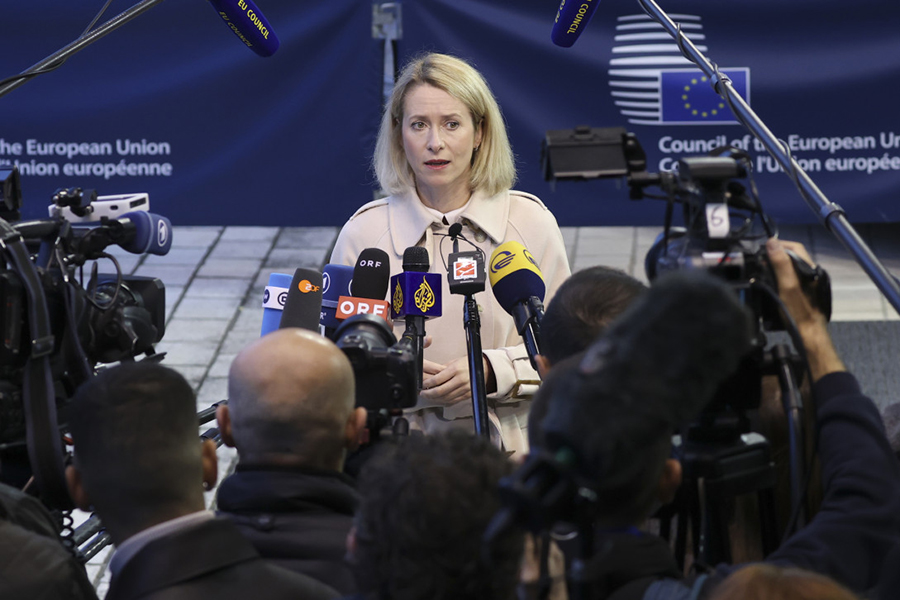
“This is the single largest expansion of our sanctions list since Russia’s war started,” EU High Representative Kaja Kallas said after the meeting on 12 October. She noted that the package also includes 77 listings targeting those involved in the sham elections and seven linked to military cooperation with North Korea. The measures, she added, aim to make it “significantly harder, slower and more expensive for Russia to produce weapons it uses to kill Ukrainians.” The objective is clear: restricting Moscow’s access to the technologies and components needed to sustain its war machine.
But do sanctions actually work, given that Russia is still fighting after more than four years of war? Responding to journalists’ scepticism, the EU’s top diplomat argued that the effects are already visible. According to Kallas, sanctions have deprived Russia of EUR 1 trillion that will not go towards funding the war, while EU action against the shadow fleet is making it much harder for Moscow to finance its military effort. French Foreign Minister Jean-Noel Barrot echoed the message, though he put the figure at EUR 500 billion, and described the new measures as further steps to “increase and aggravate the bill Vladimir Putin pays in this colonial and imperialist war that must imperatively cease.”
Lithuanian Foreign Minister Kestutis Budrys stressed the role of sanctions as a deterrent against Russian threats that are increasingly spilling into Europe through hybrid warfare. He noted that Russia is now exporting to Europe what it first tested in Ukraine: “We have to answer and respond to what we know works for Russia, that is increasing sanctions, increasing pressure, and increasing isolation.”
Ministers said that a 22nd sanctions package, further measures against Russian hybrid operations and tighter controls on the shadow fleet remain on the agenda. Alongside sanctions, the EU strategy rests on the EUR 90 billion Ukraine Support Loan, the EU’s financial and military assistance package for Ukraine for 2026-2027, of which EUR 5 billion was disbursed last week. It also includes preparations for peace, from an energy ceasefire to security guarantees coordinated by the Coalition of the Willing.
European unity, however, is clashing with a widening transatlantic divide. Over the weekend, Trump struck an energy deal with Putin involving Russian diesel supplies, presenting it as a response to US market needs. European capitals fear it sends exactly the wrong signal, undermining Russia’s economic isolation just as the EU steps up the pressure.
Kallas was clear on the issue. While acknowledging that the United States remains Europe’s greatest ally, she stressed that the sanctions regime “would work so much better if the US would be aligned with us”, an implicit reference to the weekend agreement between Washington and Moscow. Budrys was even more direct, arguing that the deal helps neither oil product prices nor transatlantic unity in keeping pressure on Russia. “It is not the European way,” he said.
The rift with the United States also extends to international justice. Washington’s announced sanctions against the International Criminal Court (ICC) have drawn strong European condemnation. Kallas said the six-month period before the measures take effect still leaves room for dialogue, but stressed that the EU has tools to protect the Court’s ability to function. These include the possible activation of the European Blocking Statute, raised by Barrot, to shield European institutions and businesses from the effects of US extraterritorial sanctions.
These developments are part of a broader pattern of tensions that has been building between Washington and Brussels for some time. While the EU stands united in pressuring Moscow, Washington risks moving in the opposite direction. The challenge is therefore back in focus: Europe must remain cohesive and prevent US-EU misalignment from undermining the broader Western strategy.




Privacy Policy

Powered by © Mobilbyte s.a.s. Information Technology