



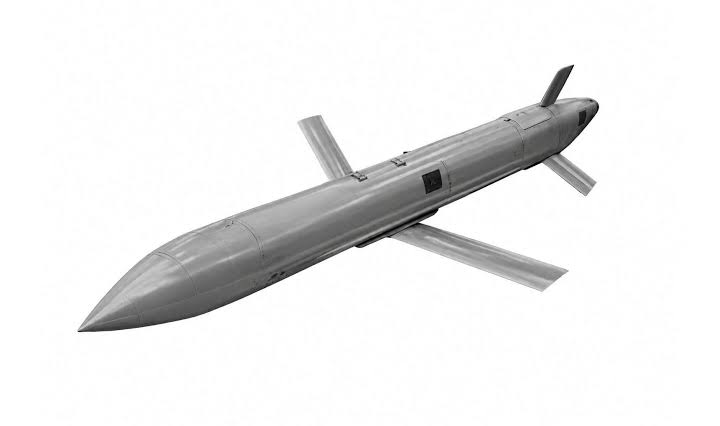
In recent weeks, Russian forces have fielded a new low-cost weapon to strike targets in Ukraine: the DAN-T mini cruise missile. The weapon was also displayed for the first time in an export variant at the El Alamein defense expo a few weeks ago.
The DAN-T is derived from the DAN-M aerial target drone. It is credited with a range of 450–500 km when air-launched, or around 250 km when ground-launched. The DAN-T is reportedly 35% cheaper than the related S-8000 BANDEROL, which itself costs 1/10 of the long-range Kh-101 cruise missile.
The DAN-T was designed to meet a requirement for greater operational flexibility. Unlike the BANDEROL — launched almost exclusively from ORION light-MALE drones — the DAN-T can be deployed from multiple airborne platforms (fighters, helicopters, and drones) as well as from ground launchers. The warhead weighs approximately 130 kg. Details on the guidance system remain limited.
The missile may use a combined INS/GNSS package for the cruise phase, with a 16-channel CRPA KOMETA module to mitigate adversary jamming, and an electro-optical camera for terminal attack against fixed targets, relying on scene-matching computer vision against a pre-loaded reference image. It is also possible that the weapon could integrate a navigation camera for the cruise phase, effectively nullifying jamming effects and enabling fully autonomous, AI-assisted flight.
Cruising speed is around 500 km/h, making the DAN-T significantly faster than the GERAN-4 — and therefore harder to intercept. Russia's stated goal is to produce up to 15,000 DAN-T units by next year.
The DAN-T makes the Russian campaign against Ukrainian infrastructure even more sustainable while multiplying Moscow's strike options. For instance, the weapon has been used against Kyiv in recent days, launched in a deep stand-off mode by Russian Aerospace Forces (Vozdushno-Kosmicheskiye Sily, VKS) fighters, as well as from ground launchers positioned in the border areas of Bryansk Oblast.




Privacy Policy

Powered by © Mobilbyte s.a.s. Information Technology