



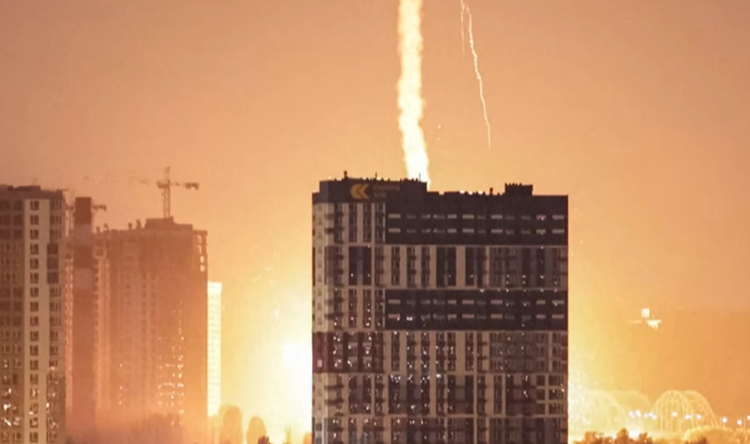
Between mid-June and the first days of July, Russia and Ukraine intensified their respective deep-strike campaigns, hitting energy, logistics and industrial infrastructure in each other's capitals with increasing frequency.
Russia carried out a series of large-scale combined attacks against Kyiv, alternating ISKANDER-M/KN-23 ballistic missiles — used in growing numbers — with ZIRCON hypersonic cruise missiles, Kh-101s and KALIBRs, alongside swarms of GERAN-2/3 drones and GERBERA decoys.
The most significant trend is the progressive decline in Ukraine's air defense intercept rate, which has fallen with each successive attack to its lowest levels in recent weeks. At least 3 factors account for this deterioration: a shortage of PATRIOT PAC-3 interceptors, Russia's increasing reliance on ballistic missiles, and the possible destruction of early warning radars — though no confirmed evidence of the latter exists — which has compressed reaction times. As a source in Kyiv confirmed to this publication, air raid alerts now sound only after the first missiles have already struck. Compounding these factors is the dependence of ballistic tracking and cueing on Western satellite data and systems.
On the other side, Ukraine has launched some of the largest long-range drone strikes of the war — with individual operations involving up to several hundred UAVs — targeting refineries, oil and gas infrastructure, and strategically significant industrial sites in the Moscow area and across other Russian oblasts. Confirmed targets include the Kapotnya refinery owned by Gazprom Neft, the Dubna space communications center, and nodes of the gas transmission network.
The escalation has been both in intensity and frequency. Some operations — including the Ukrainian strike timed to coincide with the NATO summit in Ankara — carried more political and demonstrative weight than immediate military value. In an attritional conflict with limited frontline movement, both sides are placing growing reliance on infrastructure strikes to erode the adversary's military and economic capacity.




Privacy Policy

Powered by © Mobilbyte s.a.s. Information Technology