



The European Union has formally welcomed Canada into SAFE, its €150 billion defence financing instrument aimed at supporting joint procurement and strengthening Europe's defence-industrial base. Following the final green light from the Foreign Affairs Council in Luxembourg on Monday, Ottawa becomes the first - and, so far, only - non-European country granted access to what has become the flagship instrument of the EU's rearmament effort.
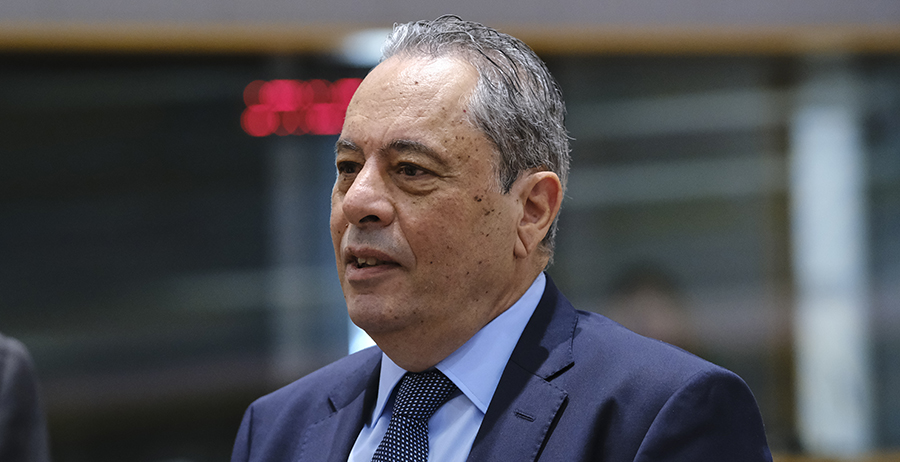
"Canada is one of the European Union's closest allies,” Cypriot Defence Minister Vasilis Palmas said after the agreement was adopted. “Having Canada joining SAFE highlights the deep trust between us and sets a strong precedent for how the EU can collaborate with key strategic partners to safeguard our collective future," he added.
SAFE is the industrial backbone of the EU's defence strategy. It provides member states with favourable financing for joint military procurement while supporting the expansion of European defence production. By joining the scheme, Canadian companies gain access to projects funded under the programme under significantly more favourable conditions than those generally available to third countries.
While Canada’s ‘entry fee’ is relatively modest (€10 million), potential implications of the deal are significant. Ottawa has launched a major increase in defence spending, committing €50.4 billion (C$81.8 billion) over the next five years to modernise its armed forces. Traditionally, much of that money has flowed to American contractors.
Speaking while the agreement was still being ratified, Canadian Prime Minister Mark Carney put it into a broader picture: "In a dangerous and divided world, Canada and Europe are elevating our defence partnerships to rapidly procure new equipment and technology, accelerate NATO targets and catalyse tremendous opportunities for our defence manufacturers". According to Carney, participation in SAFE will help "fill key reliability gaps, expand markets for Canadian suppliers and attract European defence investment into Canada".
The agreement arrives at a moment when both Europe and Canada face the same challenges: rebuilding military capabilities and industrial capacity after decades of underinvestment. Both partners are seeking to expand defence production, secure supply chains and reduce strategic vulnerabilities highlighted by geopolitical shocks. For Brussels, Canada brings key assets, from critical raw materials to advanced aerospace and satellite expertise, while for Ottawa, SAFE opens the door to one of the fastest-growing defence markets in the world.
The significance of the deal, however, goes beyond procurement. It also reflects a broader convergence of interests between two partners seeking greater strategic resilience in an increasingly volatile international environment. In practice, that increasingly means diversifying economic and security relationships that have historically revolved around the United States.
Cooperating beyond SAFE
Besides SAFE, Ottawa has increasingly turned towards European suppliers and industrial partnerships as it reassesses long-standing procurement patterns. Recent moves include negotiations with Sweden's Saab for GlobalEye airborne surveillance aircraft and consideration of Gripen fighter jets, alongside expanding defence-industrial cooperation with Poland in areas such as drones, ammunition production and air-defence systems.
Meanwhile, Canada's entry into SAFE does not emerge in a vacuum. The country has often been described by EU leaders as "the most European country outside Europe”.
In June 2025, Ottawa and Brussels signed a Security and Defence Partnership covering cyber security, military mobility, hybrid threats, industrial cooperation and support for Ukraine. Canada already participates in European military mobility initiatives and has steadily deepened defence cooperation with several EU member states.
While industrial cooperation remains the most immediate driver of the agreement, the partnership also reflects a broader geopolitical convergence between two actors seeking greater resilience amid increasingly uncertain global dynamics.
The US factor
This convergence comes at a particularly delicate moment in relations between Ottawa and Washington. Since Donald Trump's return to the White House, tensions over trade, tariffs and defence spending have intensified.
In May, the Pentagon suspended its participation in the Permanent Joint Board on Defense, the body that has coordinated military cooperation between Canada and the United States since 1940. US Under Secretary of Defense Elbridge Colby justified the move by arguing that Canada had failed to make "credible progress" on its defence commitments.
For his part, Carney has repeatedly argued that Canada's relationship with the United States has been "permanently altered" and that Ottawa must diversify both its economic and strategic partnerships. At the same time, frictions between Europeans and the US have intensified over the last year.
The SAFE agreement, coupled with frictions that both partners are experiencing with the US, does not mean that Washington is or can be replaced. The economic, technological and military ties binding both to Washington remain enormous, while NATO continues to provide the foundation of transatlantic security. In this light, the agreement is rather a recognition that, in a complex world, resilience increasingly means diversification rather than dependence on a single partner.



Privacy Policy

Powered by © Mobilbyte s.a.s. Information Technology