



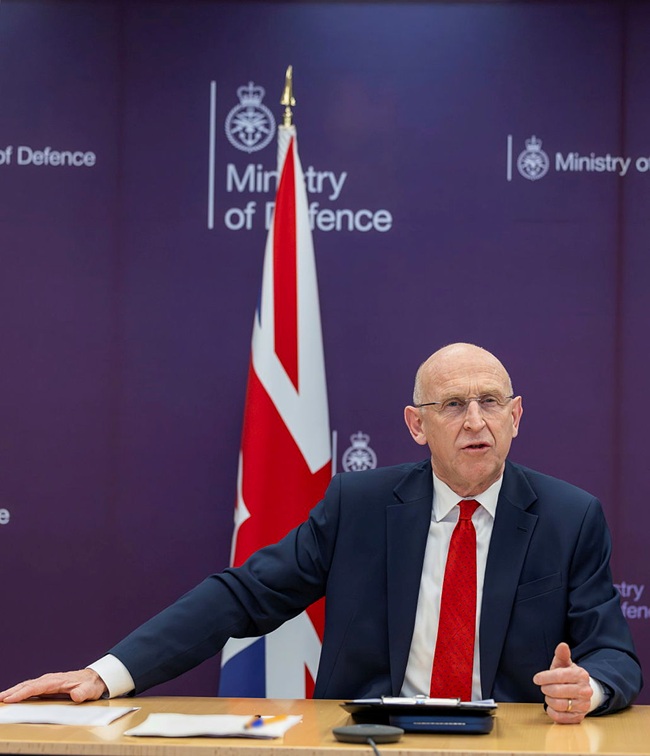
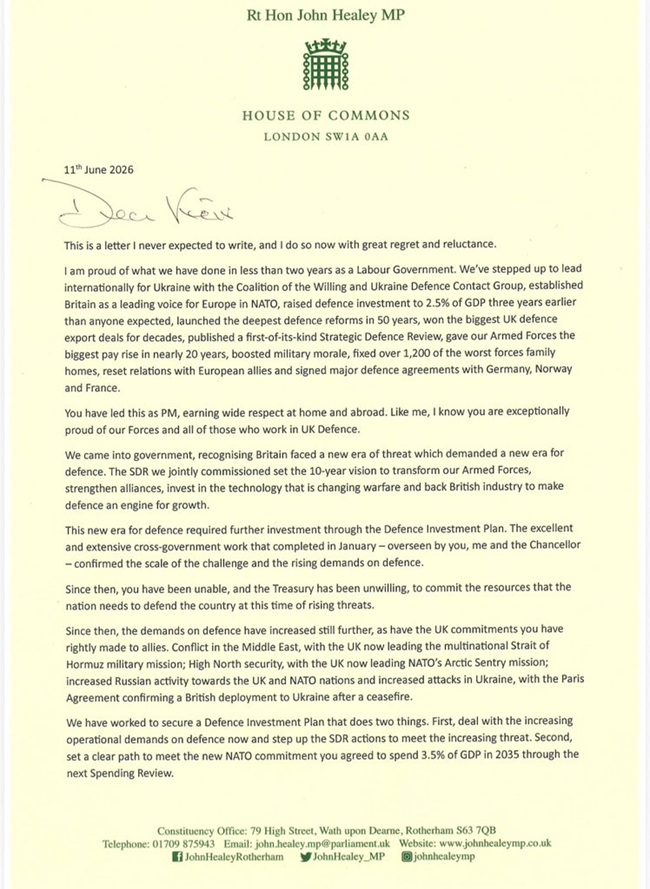
In the increasingly embarrassing chaos surrounding the now-infamous British “Defence Investment Plan,” the resignation letter from Secretary of State for Defence John Healey has detonated like a bomb. With dignity, he distances himself from a document that betrays all the promises and statements made by Prime Minister Starmer both domestically and to international partners.
The publication of the DiP has been repeatedly delayed for a long time. It was originally scheduled for autumn 2025, then pushed to the end of 2025, then early 2026, and so on. In just the last two weeks, the publication date has continued to slip again and again. Officially, the government has committed to publishing it before the NATO summit on 7 July. The “natural” final deadline is 16 July, when Parliament rises for the summer recess. If 16 July passes without results, it will slip straight to September.
The reasons for the continuous delays are the internal battles within the government, with the Treasury in open rebellion against the Prime Minister, constantly revising downward the amounts to be allocated to Defence. Faced with an estimated £28 billion shortfall, only in the last few weeks has there been talk of an injection of £18 billion over four years - promptly reduced to £15 billion, then to £13.5 billion, and possibly even less.
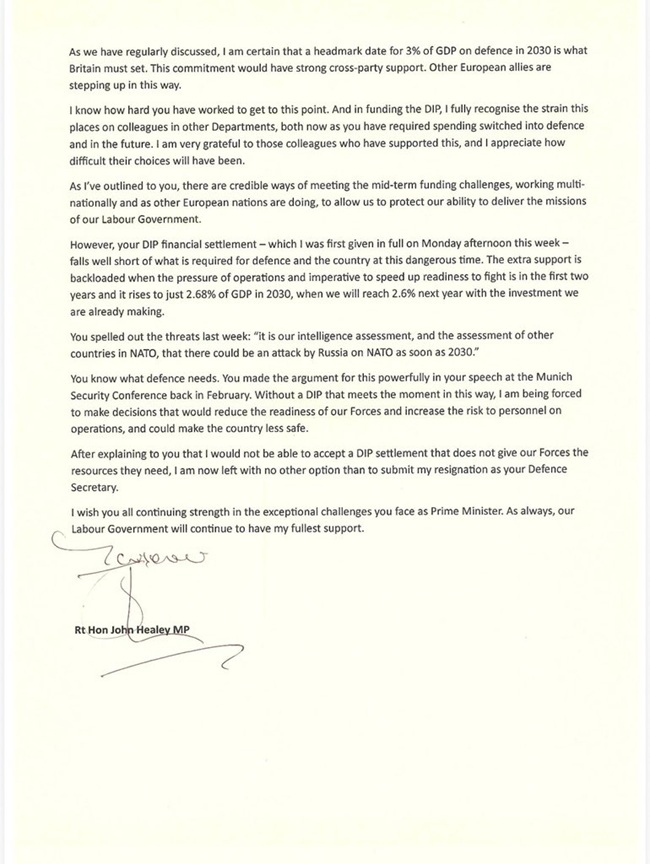
Healey has now drawn a line. In his resignation letter, he states that he was only informed last Monday of the amount of resources allocated. Little or no help is being given to the struggling defence budget over the next two years, and even in the longer term the injection of funds is utterly anemic. Against a commitment to reach 3% around 2030, the funds would in reality bring spending, according to Healey, to just 2.68% (moreover, to be achieved - as previously announced - by including roughly 0.1% for Intelligence spending).
As Healey himself recalls in his letter, only a few days ago Starmer publicly reaffirmed that both national and NATO intelligence consider it likely that Britain could be at war with Russia by 2030. Yet words are not being followed by any concrete action.
The Defence Investment Plan will in fact not be a list of new investments, but yet another list of survivors of inevitable cuts and deferrals. “[…] I am being forced to take decisions that would reduce our operational readiness, increase risks to personnel on operations, and could make the country less safe.”
“After explaining to you that I could not accept a DiP that does not provide our Forces with the resources they need, I now find myself with no other option but to tender my resignation as your Secretary of State for Defence,” Healey writes in conclusion.
This is a politically costly and extraordinarily heavy move, with few historical precedents. One must go back to 1966 - again under a Labour government - when the then Minister for the Navy Christopher Mayhew resigned in the face of devastating cuts that cost the Royal Navy its aircraft carriers and its status.
Follow us on Telegram, Facebook and X.




Privacy Policy

Powered by © Mobilbyte s.a.s. Information Technology