



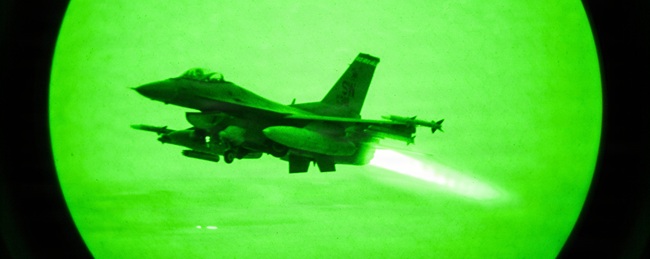
Overnight, in response to the shootdown of an APACHE helicopter, the United States launched a series of airstrikes against targets in southern Iran.
As currently reconstructed, the strikes hit military sites, radar installations, air defense and missile launchers on Qeshm Island, in the Bandar Abbas and Jask areas, and on Sirri Island. Tehran's response was immediate: missiles and drones were launched against U.S. bases in Kuwait, Bahrain, and Jordan. At least 1 strike appears confirmed against the (former) Fifth Fleet headquarters in Bahrain.
Washington clarified that the operation was a targeted response to the APACHE shootdown and that it does not affect the ongoing negotiating process. In essence, Tehran and Washington continue to pursue diplomacy on 1 track while exchanging military blows on another, following a tit-for-tat logic of proportional, calibrated retaliation.
A new strategic dynamic is taking shape: force is being rationed by both sides and kept within politically manageable thresholds, while each party seeks to manipulate the negotiation in its own favor - a negotiation in which the core stakes are reputation, credibility, and residual strength and resilience.
An ambiguous situation, played on a knife's edge. How long it can hold is unclear. The only certainty is that this hybrid framework is already producing serious consequences for global economic stability.




Privacy Policy

Powered by © Mobilbyte s.a.s. Information Technology