



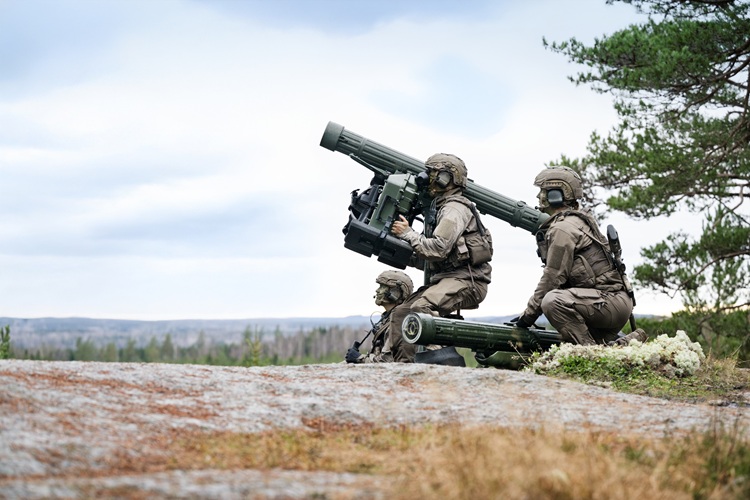
Today, 8 May 2026, Saab announced the launch of BOLIDE 2, the new version of the BOLIDE missile for the RBS-70 NG short-range air defence system. During a visit to Saab Dynamics' facility in Karlskoga, FW Mag received a dedicated briefing from Mats-Olof Rydberg, Saab's Head of Product Unit GBAD (Ground Based Air Defense), on the new missile - developed, tested and produced entirely at that facility.
BOLIDE 2 will become the standard munition for the RBS-70 NG, with pre-production scheduled to begin in autumn 2026 and first deliveries in the second quarter of 2027. Saab has already secured multiple contracts for the new missile.
BOLIDE 2 is the direct evolution of the original BOLIDE (fourth generation of the RBS-70 missile family, introduced in 2003 with first deliveries in 2005) and introduces an updated modular architecture in both hardware and software, designed to allow incremental upgrades throughout the system's lifecycle.
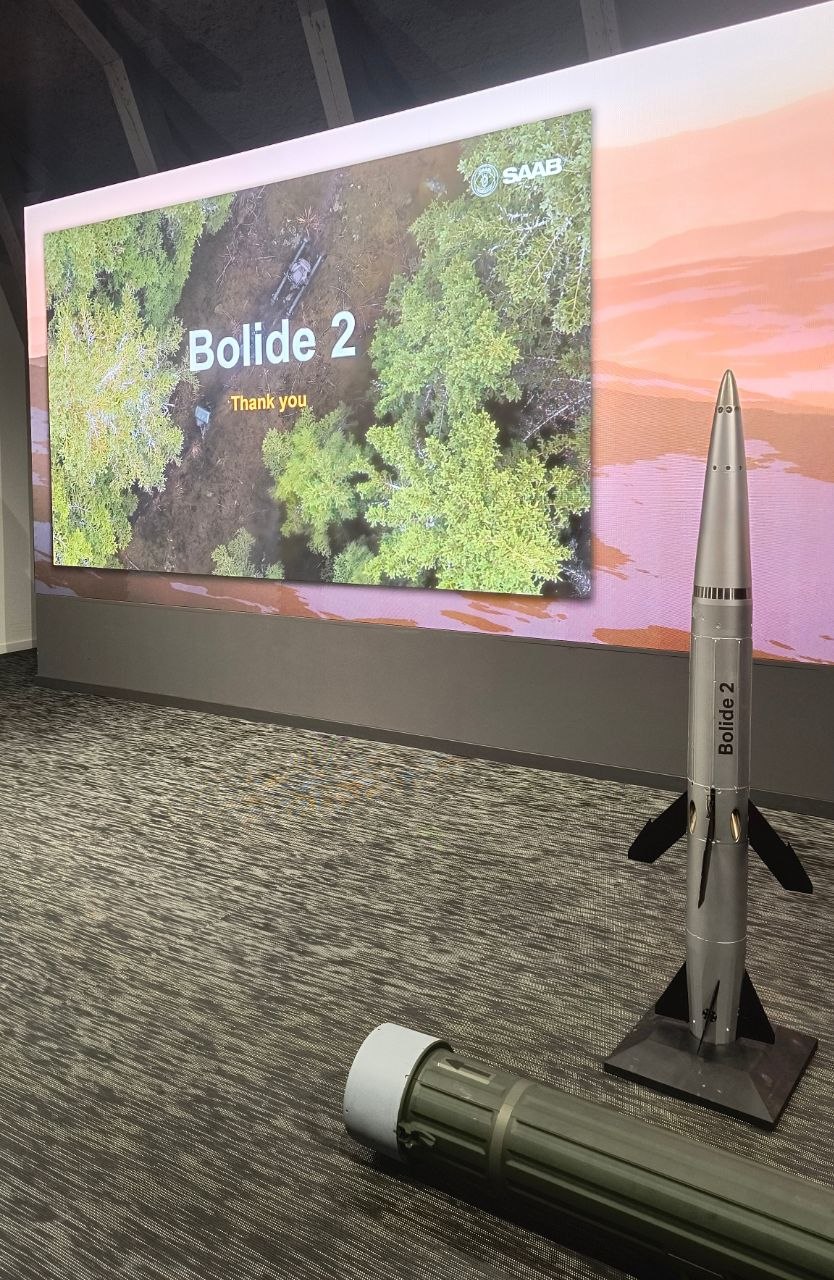
The main innovation concerns the warhead: the miniaturisation of electronic components has freed sufficient internal volume to accommodate a larger warhead. The casing is now aluminium rather than steel: the lower material density allows the overall weight to remain unchanged (with no impact on the missile's kinematics) while housing 50% more explosive and 40% more fragments than the original BOLIDE. The shaped charge liner has also been changed from copper to aluminium.
The increased explosive mass, higher fragment count and updated shaped charge improve effectiveness against armoured aerial targets, primarily attack helicopters (the missile's original design intent); the system also retains a secondary engagement capability against lightly armoured ground targets such as APCs, likewise benefiting from the new shaped charge. The warhead is activated via laser proximity fuze for aerial target engagement; against ground targets, the fuze switches to impact mode to optimise the penetrating effect of the shaped charge. The guidance system and motor have also been updated, with improved manoeuvrability at high altitudes.
BOLIDE 2 is backward compatible with previous generations of RBS-70 launchers. The nominal operational life of the missile is 15 years, after which an MLU extends service life by a further 15 years.
The new missile, like its predecessor, uses laser beam-riding guidance, with an engagement range of up to 9 km and altitude coverage up to 5,000 m. The missile therefore has no autonomous seeker, but follows the laser beam emitted by the sighting system, which the operator must keep on the target until impact. The absence of a seeker makes the system inherently immune to flares, chaff, jamming and any countermeasure based on deceiving a guidance sensor — also contributing to a lower unit cost compared to seeker-equipped missiles. The laser beam-riding guidance is however subject to atmospheric conditions, which can affect engagement performance. Should the laser link be interrupted for longer than a predefined threshold, the missile automatically initiates its self-destruct procedure.
Alongside the missile, Saab has introduced a new carbon fibre launch tube replacing the previous fibreglass version, manufactured through a fully automated production process.
The RBS-70 NG is available in 2 operational configurations. The MANPADS version is operated by a crew of 3 and achieves operational readiness in 45 seconds; the complete system weighs approximately 60 kg, distributed between the missile and tube (20 kg), the sighting and guidance unit (25 kg) and the tripod with operator seat (15 kg).
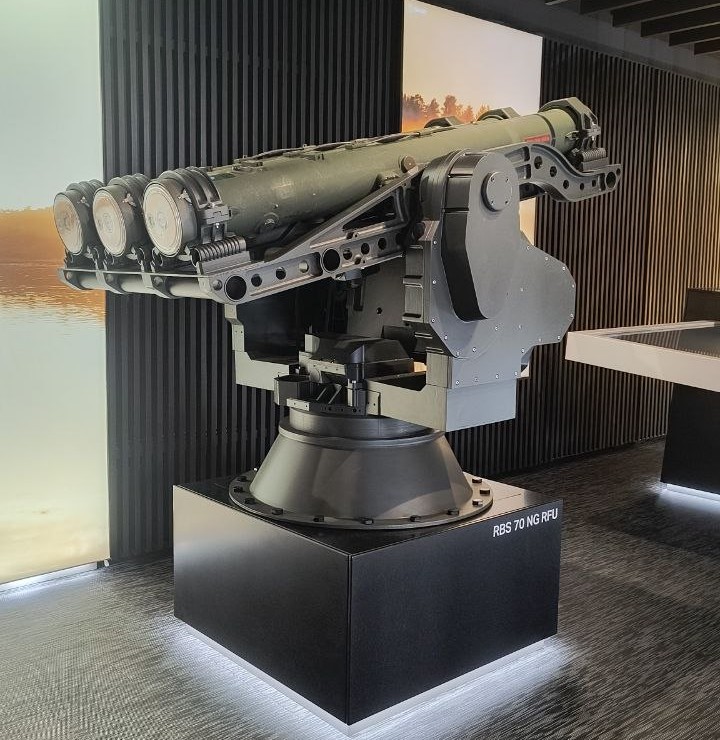
The Mobile Firing Unit turret configuration is equipped with 3 launch tubes and is designed for integration on wheeled or tracked vehicles, as well as in fixed emplacements: contracted customers for this configuration include the Czech Republic, which integrates the system on the MARS S-330 4x4 armoured vehicle produced by SVOS, Lithuania on the JLTV and Sweden on the BVS-10. The system's open architecture allows integration with third-party air defence systems and multi-layer GBAD networks.



Privacy Policy

Powered by © Mobilbyte s.a.s. Information Technology