



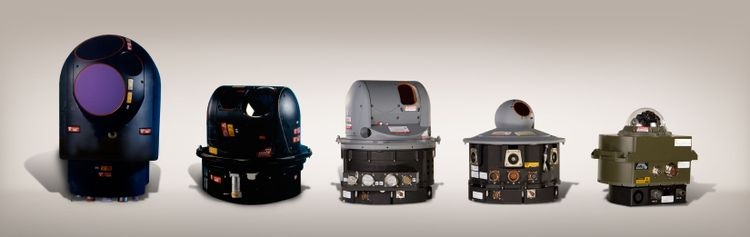
The infrared threat to military aviation has never been static, and the systems designed to defeat it have had to evolve in lockstep. From the first generation of uncooled, tail-chase-only seekers fitted to the FIM-43 REDEYE and SA-7 GRAIL (STRELA) in the 1960s, through the cooled, all-aspect rosette-scanning heads of third-generation weapons like the FIM-92 STINGER and SA-18 GROUSE (IGLA-M), to today's imaging-infrared focal-plane-array seekers capable of discriminating an airframe's thermal silhouette from any decoy, the progression has been relentless.
Fourth-generation missiles such as the Russian SA-29 GIZMO (VERBA) employ tri-band optical seekers specifically hardened against conventional flares and older jamming techniques, while emerging fifth-generation concepts - exemplified by the Turkish Roketsan SUNGUR - add network-centric cueing and enhanced counter-countermeasure logic designed to resist laser-based disruption itself. For helicopter crews operating at low altitude in contested environments, this generational arms race means that the traditional flare dispenser, once the sole line of defence, has become necessary but no longer sufficient.
The operational answer has been the Directional Infrared Countermeasure, or DIRCM: a laser-based system that acquires a declared threat handed off by a missile warning system, tracks it at high angular rates, and injects precisely modulated energy into the missile's seeker to break its guidance loop. The concept is not new - Northrop Grumman's Rolling Meadows facility in Illinois has been working on laser-based IRCM for over thirty years - but translating it into a system light and reliable enough to ride on a combat helicopter, rather than a strategic transport, has been the defining engineering challenge of the past decade. Early-generation Northrop systems, beginning with arc-lamp emitters in the 1970s and progressing through the AN/AAQ-24 NEMESIS family fielded on more than 1,500 fixed-wing and rotary platforms across 85 types, proved the phenomenology but imposed size, weight and power penalties that effectively confined DIRCM to larger airframes. The Common Infrared Countermeasures system (CIRCM) was conceived precisely to break that constraint.
Designed in the mid-2010s and brought to full-rate production in 2021 after a rigorous Initial Operational Test and Evaluation campaign that included the US Army's first-ever quadruple simultaneous threat defeat at White Sands Missile Range, CIRCM represents what Northrop Grumman describes as its fifth generation of laser IRCM.
The system's architecture separates the pointer-tracker jam heads (which slew, acquire and lase) from a centralised processor installed deeper inside the airframe, a deliberate departure from the company's earlier Air Force programmes where more processing sat in the turret itself. That split allows the jam heads to fit within the extremely tight installation envelopes of platforms like the AH-64 APACHE and UH-60 BLACK HAWK, while retaining enough laser output to protect the far hotter signature of a CH-47 CHINOOK. The pointer-tracker units are manufactured by Leonardo at its Edinburgh facility under a long-term agreement that has already delivered well over 1,700 units, while the quantum cascade laser comes from DRS, making CIRCM a transatlantic best-of-breed assembly rather than a single-source product. By early 2026, nearly 700 CIRCM ship sets had been installed on US Army rotorcraft, accumulating more than 70,000 operational flight hours across the APACHE, BLACK HAWK and CHINOOK fleets with no aircraft losses to threats addressed by the system - a statistic Northrop Grumman executives cite as unmatched by any competitor.
The competitive field is narrow but credible. Elbit Systems markets the MUSIC family in several variants: the J-MUSIC, optimised for large fixed-wing transports and already selected by Germany for the Airbus A400M and A350 VIP fleet, and the Mini-MUSIC, a sub-seven-kilogram single-turret unit pitched at medium helicopters including the NH90.
Leonardo, for its part, offers the MIYSIS DIRCM - a twin-head system weighing less than 40 kg and drawing under 600 W during jamming - which was competitively selected in July 2025 to protect the Luftwaffe's six C-130J SUPER HERCULES operated within the Franco-German Binational Air Transport Squadron. MIYSIS distinguished itself at a NATO live-fire trial at Sweden's Vidsel range as the only system to defeat multiple infrared missiles fired simultaneously, and Leonardo highlights its ITAR-free export status as a significant commercial advantage.
The Russian Vitebsk PRESIDENT-S, meanwhile, equips frontline helicopters but its performance claims remain largely unverified by independent Western testing.
What separates CIRCM from these alternatives, in Northrop Grumman's view, is the depth of operational experience, breadth of live-fire qualification across threat types, and the maturity of a global sustainment infrastructure that already includes in-country repair facilities in Australia and the United Kingdom.
That infrastructure argument is becoming central to the export case, particularly in Europe. The United Kingdom signed a Foreign Military Sales case for CIRCM in July 2024, becoming the first international customer; ten of the RAF's fourteen new H-47 Extended Range Chinooks will carry the system from 2027. Germany followed in early 2026, with 47 CIRCM units awarded under a US Army production contract to equip its 60 incoming CH-47F Block II helicopters - the heavy-lift replacement for the ageing CH-53G fleet, contracted through Boeing in a FMS deal. Berlin's selection of CIRCM for the Chinook sits alongside its choice of Elbit's J-MUSIC for the A400M and Leonardo's Miysis for the C-130J, effectively distributing the German DIRCM market across three vendors and three platform families, a pragmatic if complex outcome that reflects the differing procurement channels rather than any single national DIRCM strategy.
For Northrop Grumman, the German CHINOOK award represents a major entry point. Northrop Grumman told FW MAG that conversations are also ongoing across Europe and Asia. In Europe, the company's ambition is to compete broadly across European rotary-wing fleets as defence spending rises in response to the security environment reshaped by Russia's war in Ukraine. The offer includes flexible sustainment models (from full contractor logistics through in-country repair centres staffed by local nationals) as already established for Australia and the UK, to support for organic military depot capability, as practised by the US Air Force at Warner Robins.
CIRCM's modular, open-architecture design is presented as the vehicle for keeping pace with the evolving IR threat: rather than redesigning and requalifying the entire system when a new seeker generation appears, Northrop Grumman intends to upgrade internal components (laser modules, software loads, threat libraries) while leaving the aircraft's A-kit wiring and mounting unchanged. Under this light, the US Army's 2025 decision to advance the Improved Threat Detection System into Phase II development, integrating it with CIRCM, signals that the next move in the leapfrog game between seeker and jammer is already under way.




Privacy Policy

Powered by © Mobilbyte s.a.s. Information Technology