



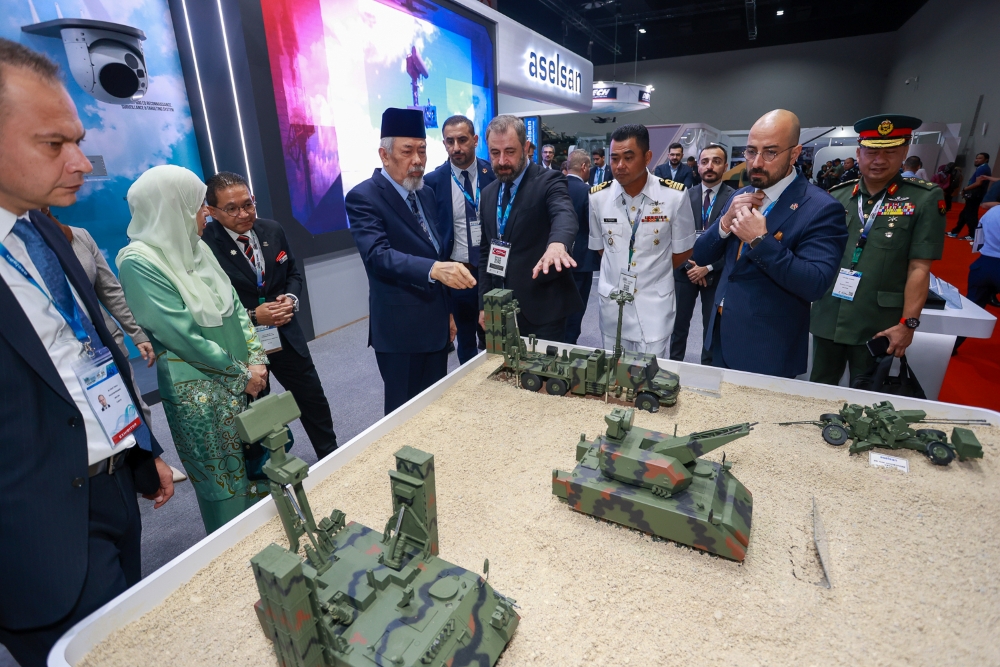
DSA & NatSec Asia 2026 open in Kuala Lumpur as the largest iteration to date, with 1,456 exhibitors from 63 countries and a show floor that has become a proxy for how Indo Pacific defence and security are evolving under sustained geopolitical pressure. This year’s edition is not only bigger but qualitatively different, with a denser concentration of unmanned systems, networked land platforms and integrated security solutions than previous years.
Geopolitics on the exhibition floor
The 19th DSA & NatSec Asia takes place against a backdrop of simultaneous crises in Europe, West Asia and the South China Sea, and organisers have chosen the theme “Empowering Capabilities and Resilience Through Technology” to emphasise how states are trying to build strategic depth through innovation rather than numbers alone. Malaysian officials have persisted with a full scale event despite turbulence in global markets and security affairs, casting Kuala Lumpur as a stable hub where rival blocs can still meet, talk and trade. The updated participation figures underscore that claim. A record 37 national pavilions are on site, including first time appearances from Croatia, Finland, Hungary, Japan and Russia, alongside established players from the Gulf, Europe, North East Asia and across ASEAN. From the USA Partnership Pavilion to a highly visible UAE presence, the exhibition floor is a physical map of diplomatic alignments, industrial ambitions and market positioning across the Indo Pacific and beyond. Iran’s last minute withdrawal, officially attributed to logistical constraints in the Strait of Hormuz rather than political pressure, is a reminder that shipping routes, sanctions regimes and back channel diplomacy all intersect at events like DSA.
Within ASEAN, the geopolitics are equally layered. Indonesia’s Indo Defence contingent is openly using DSA to promote its own 2027 show, signalling an intra regional contest to anchor supply chains, attract joint ventures and shape the region’s future defence economy. For Malaysia, hosting the prime minister led opening ceremony and bringing in high level delegations from around the world turns DSA into an instrument of statecraft as much as a trade fair.
Procurement and technology trends
Behind the rhetoric, DSA 2026 is about concrete procurement decisions and capability roadmaps. The show is dominated by three broad trends: unmanned and autonomous systems, next generation land combat platforms, and integrated command, control and communications. Air and ground forces in the region are rapidly adapting to lessons drawn from Ukraine, Gaza and the Red Sea.
Land warfare is another centre of gravity. In Malaysia’s national pavilions, tracked and wheeled combat vehicles - equipped with remote weapon stations, active protection systems and digital backbone architectures - are marketed for high intensity conflict and urban operations alike. This visual evidence dovetails with recent regional deals, such as Singapore’s selection of the TITAN 8x8, which illustrate a move towards more modular, exportable platforms designed to plug into coalition C4ISR networks. Exhibitors are clearly pitching solutions that balance protection, mobility and interoperability for forces that expect to fight in information saturated, drone dense environments. Communications, cyber and electronic warfare have moved from the margins to the core of the show. Spectrum monitoring systems, secure software defined radios and electronic intelligence solutions appear prominently in the footage, echoing DSA’s own description of itself as a major showcase for advanced electronic warfare and information age capabilities.
Alongside this, the co-located NatSec Asia component boosts the presence of border security, policing, emergency response and critical infrastructure protection technologies, making it clear that many customers are thinking in terms of national resilience as much as high end warfighting.
Malaysia’s industrial ambitions
The event gathers 368 Malaysian companies, reflecting Kuala Lumpur’s push - codified in the National Defence Industry Policy (DIPN) - to reach at least 30 percent local content in defence assets and systems. The creation of a Local Defence Industry Alliance Pavilion and prominent branding for national champions show that Malaysia wants to move from component level participation to systems integration and exportable solutions. Economic and industrial spill overs are central to this ambition. Bernama reporting and organiser statements stress that DSA & NatSec Asia 2026 are designed to strengthen local industry participation through ICP/offset packages, technology transfer arrangements and co development projects negotiated on the margins of the exhibition.
For Malaysian firms, the density of global primes and SMEs is both an opportunity and a test: the week in MITEC will help determine who secures the partnerships necessary to ride the next decade’s technological wave.
Towards a deeper series
From the vantage point of the exhibition floor, DSA 2026 confirms that Southeast Asia has become one of the world’s key theatres for defence diplomacy, arms procurement and industrial repositioning.
The region is quietly rearming while trying to keep strategic options open. This article is the opening to a series of pieces dedicated to DSA & NatSec Asia 2026, where FW MAG is present with a special correspondent. We will track how one exhibition has become a lens through which to read the Indo Pacific’s future security order - and how regional and external powers intend to shape it.




Privacy Policy

Powered by © Mobilbyte s.a.s. Information Technology